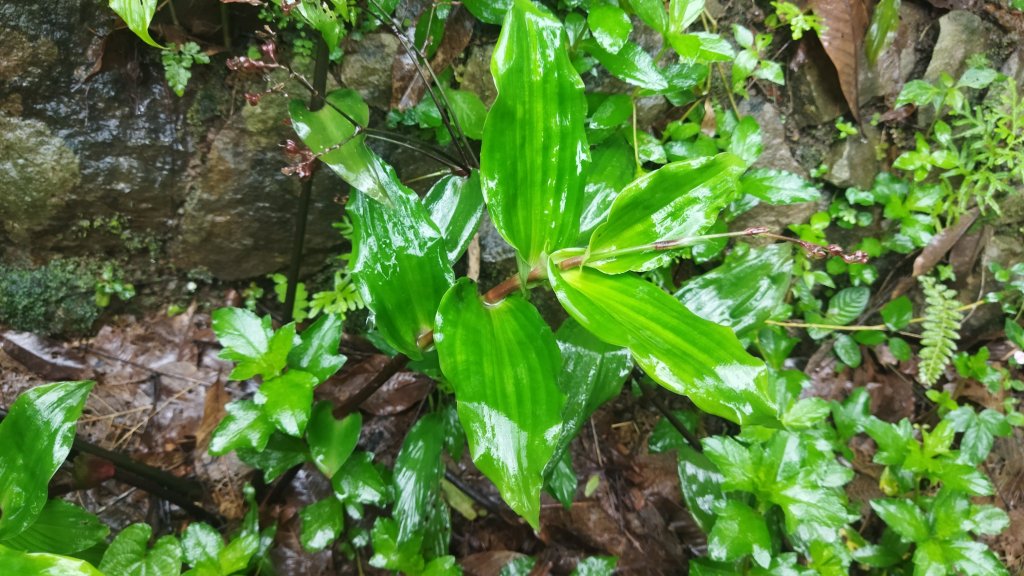
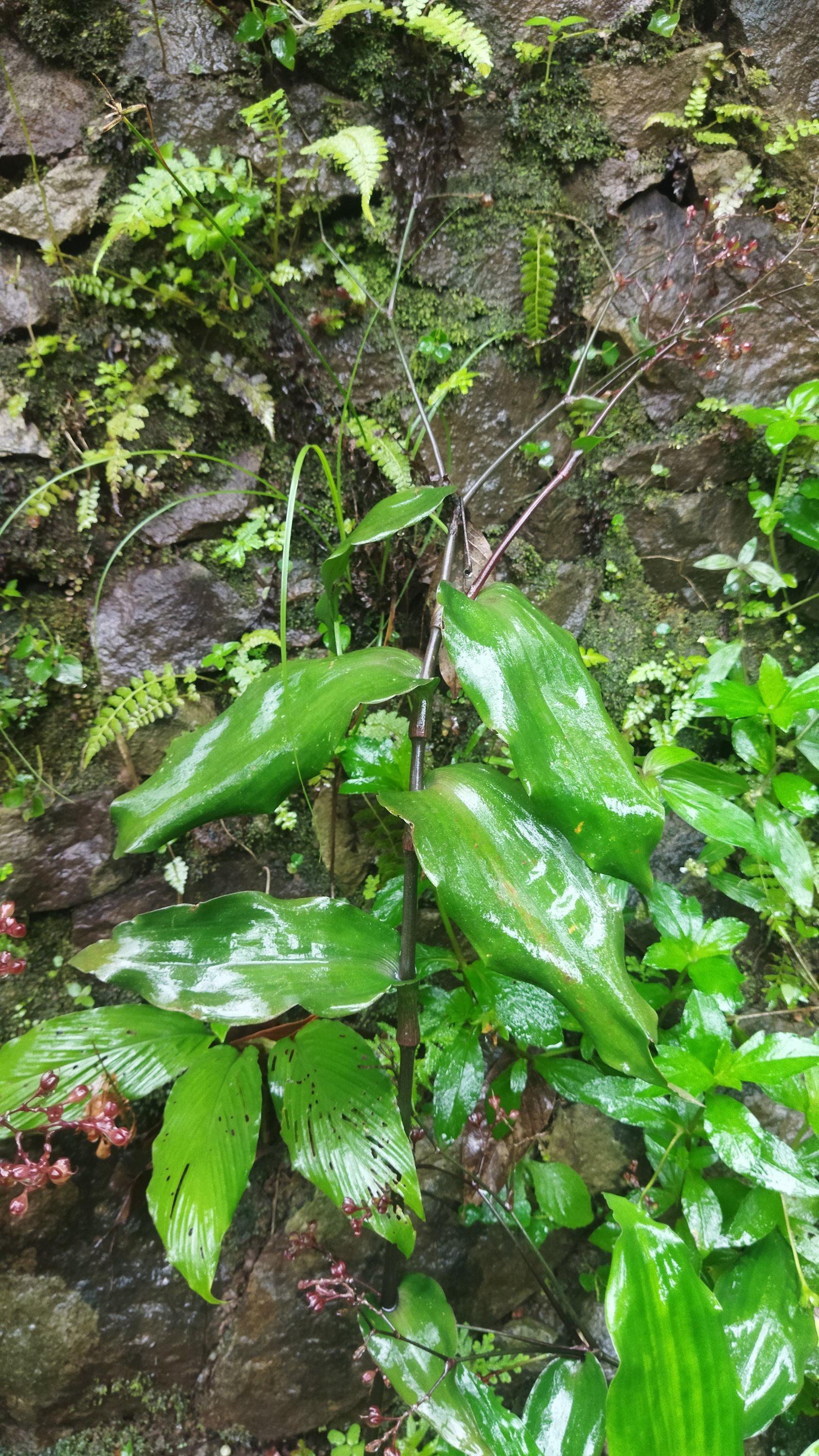
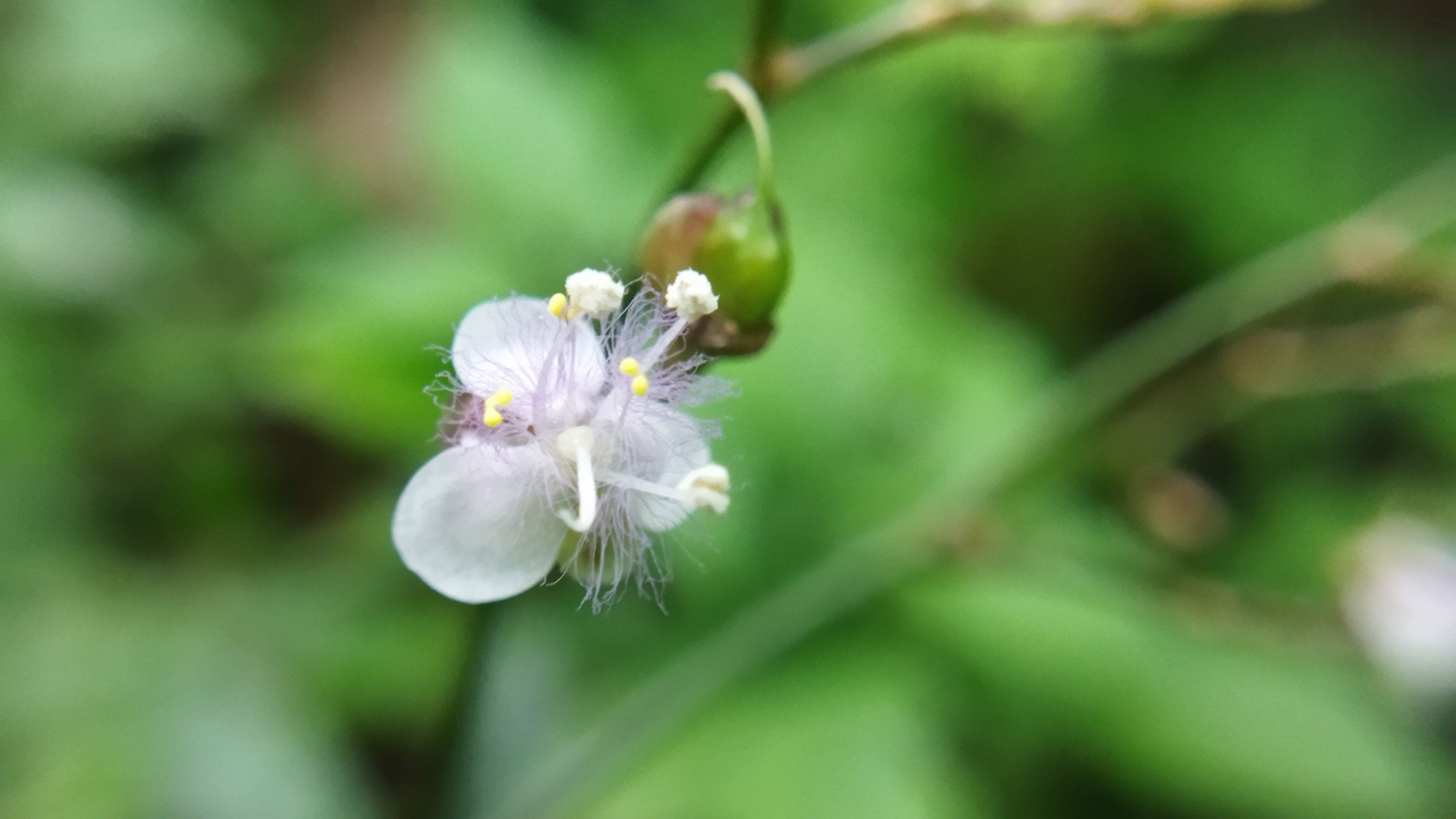
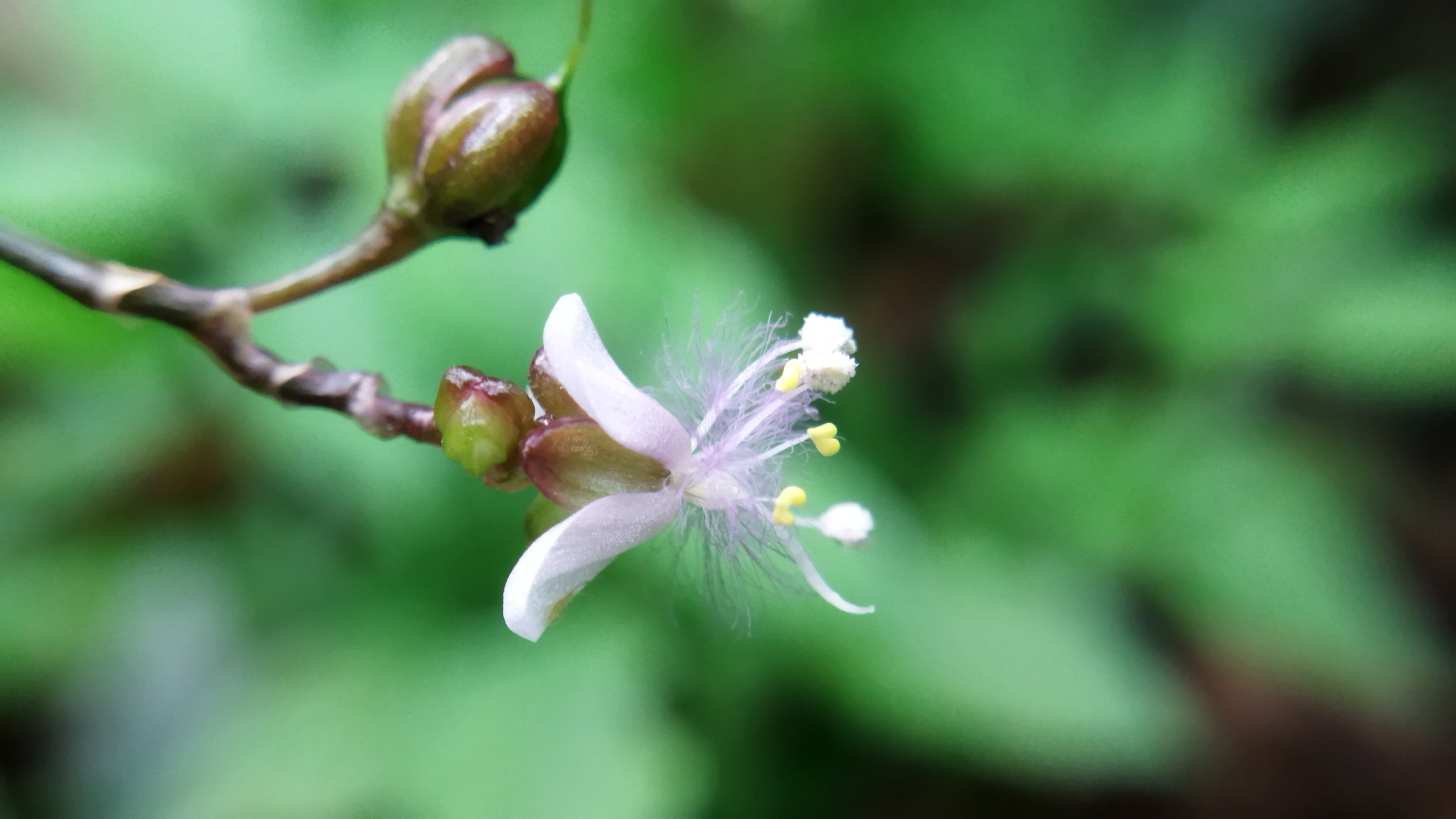
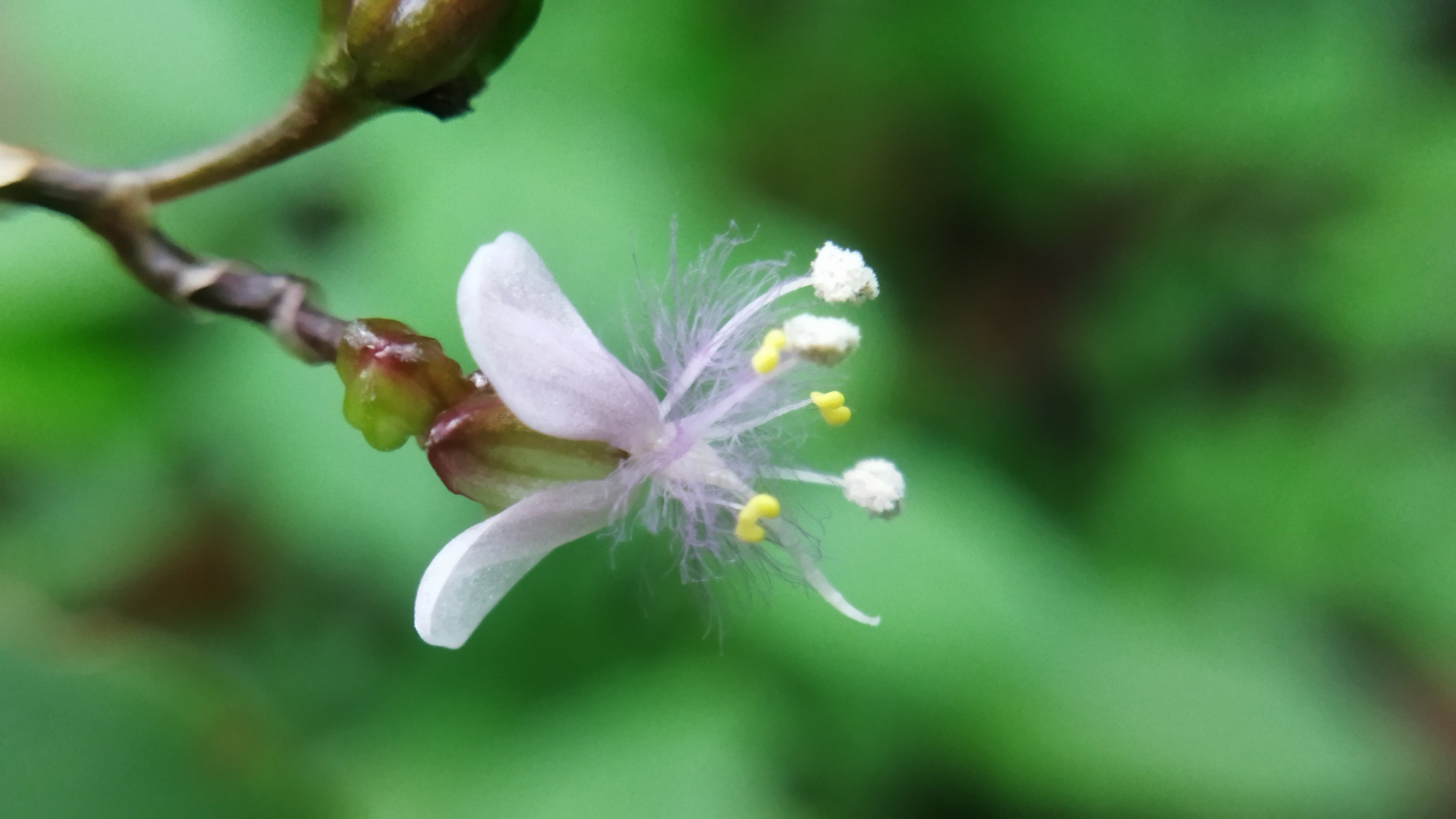
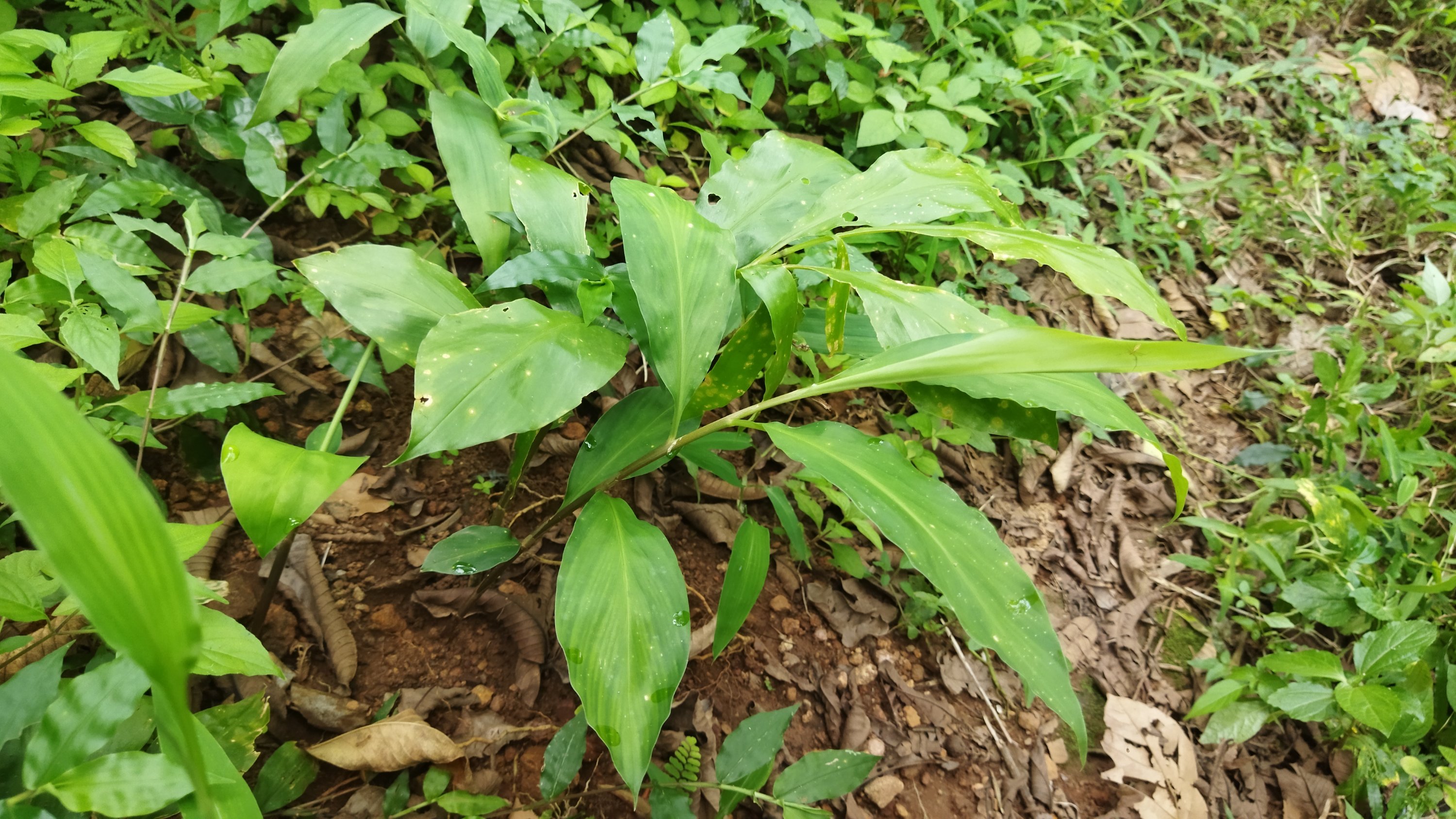
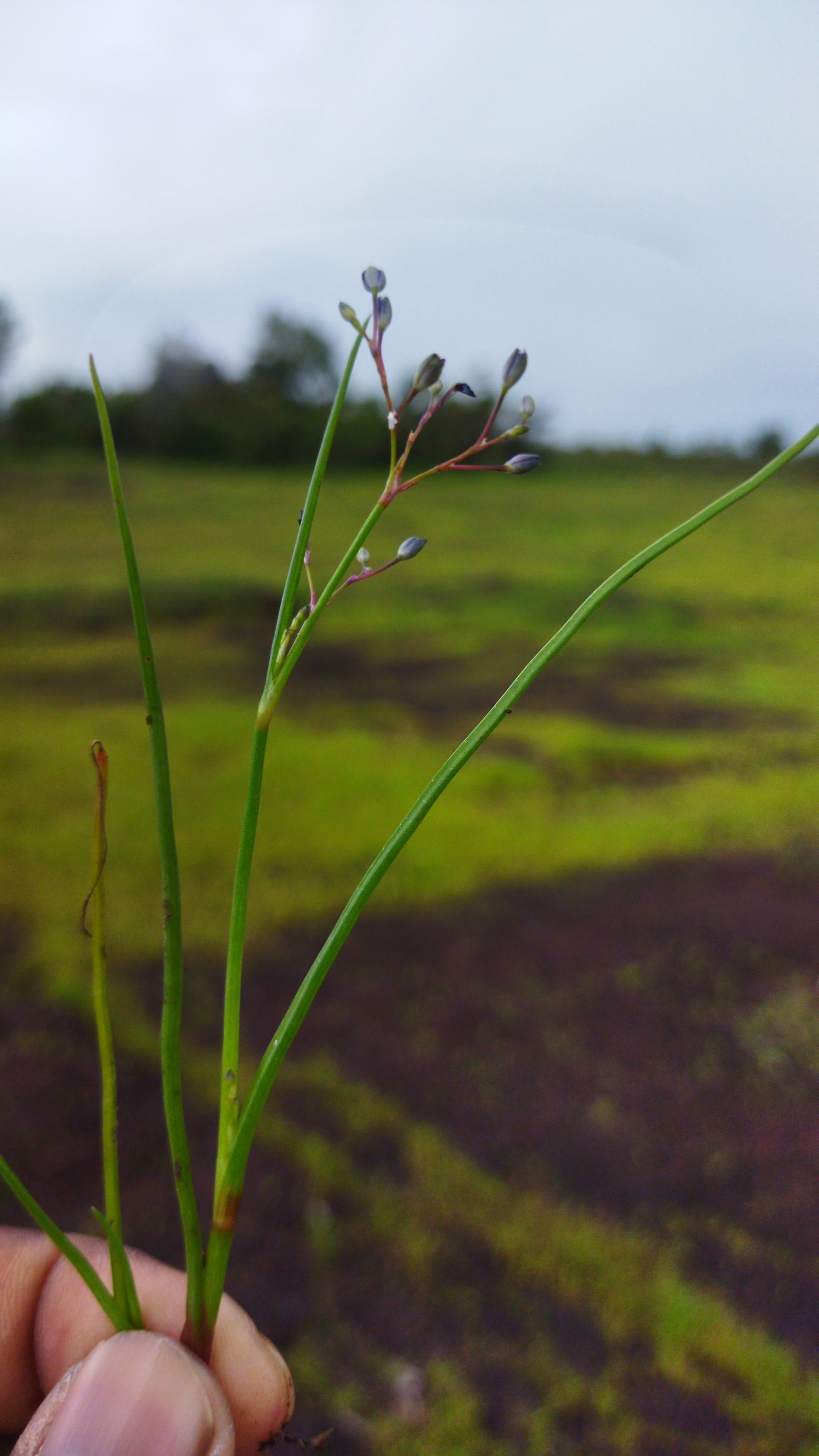
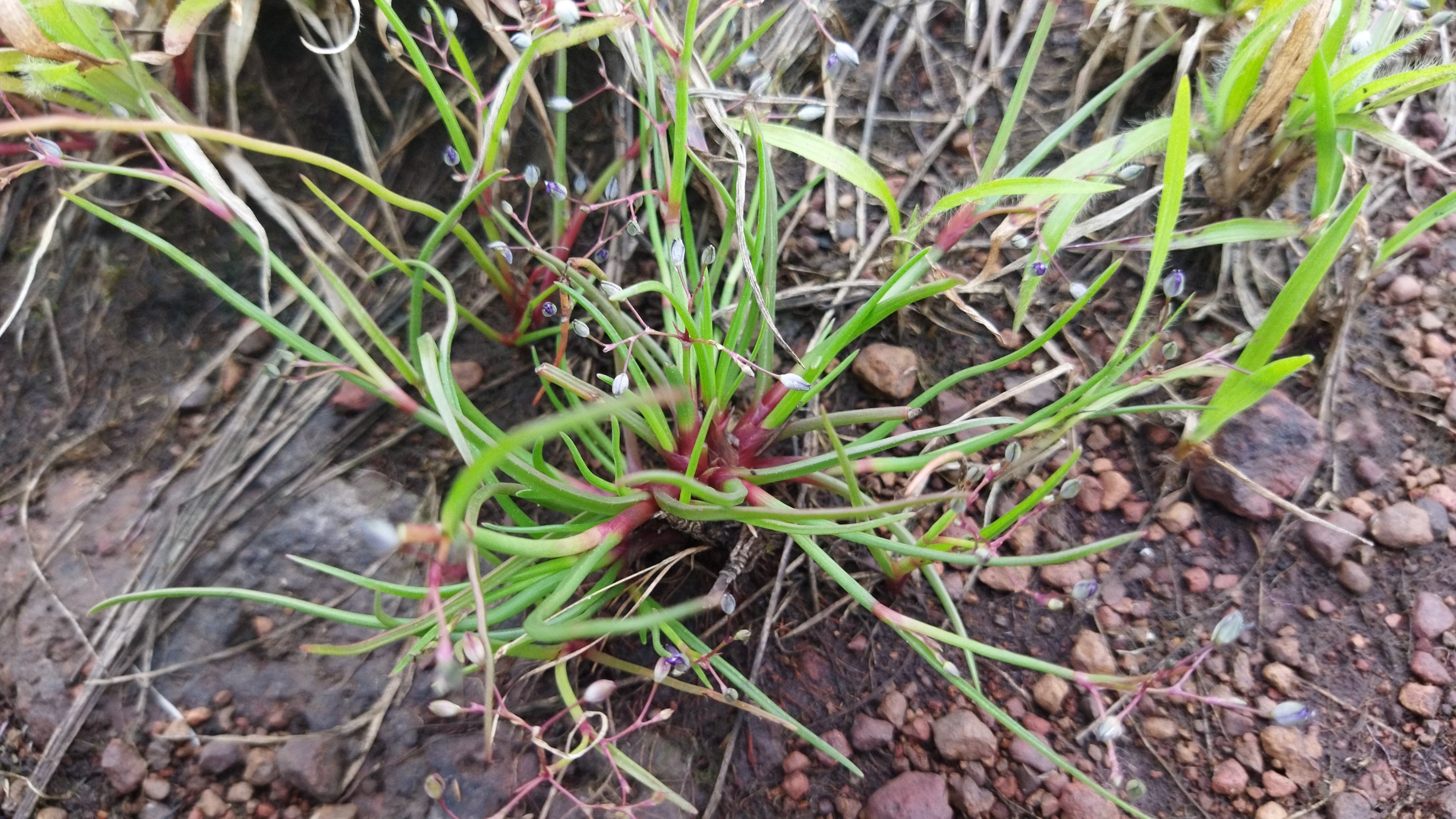
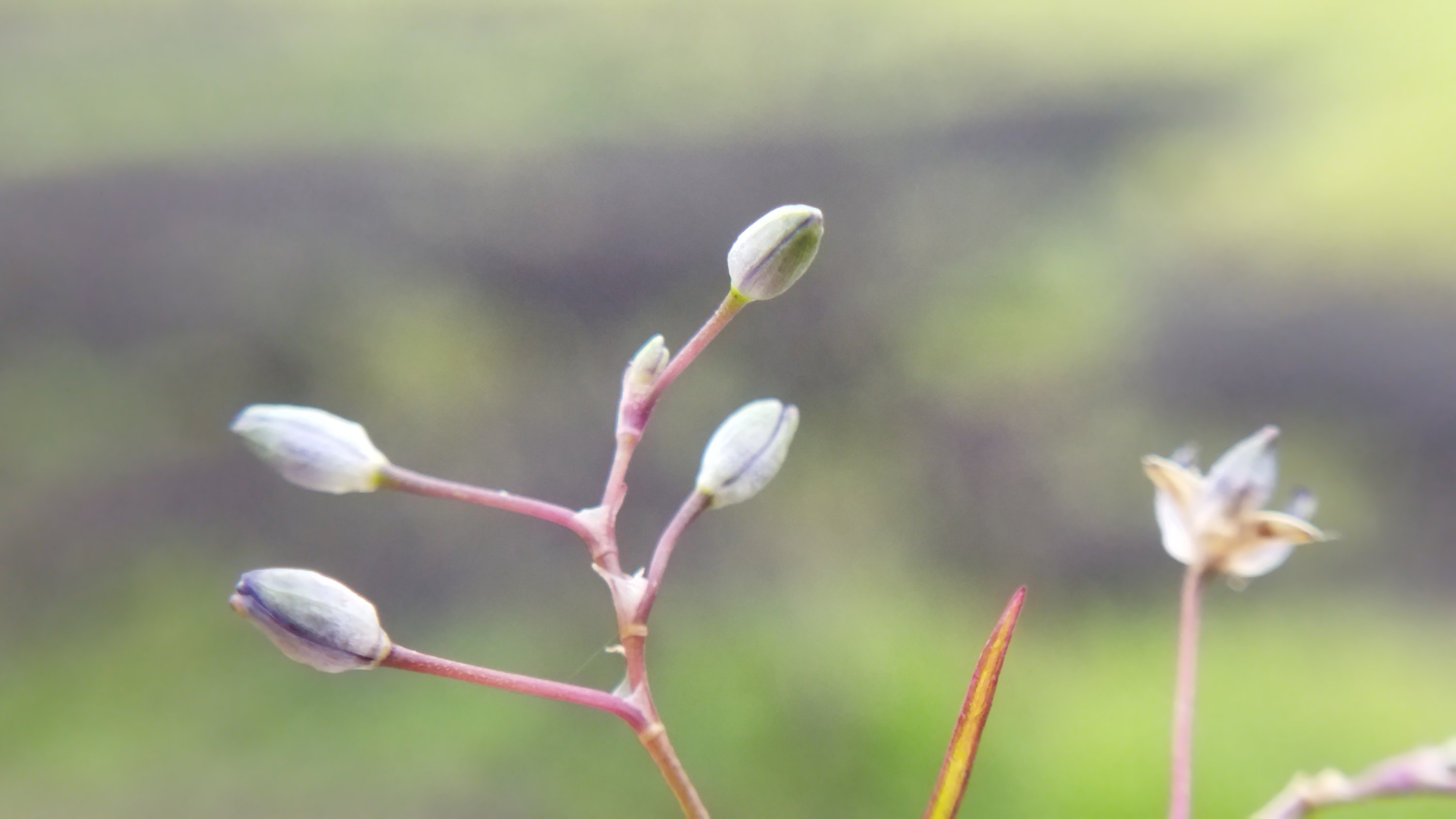
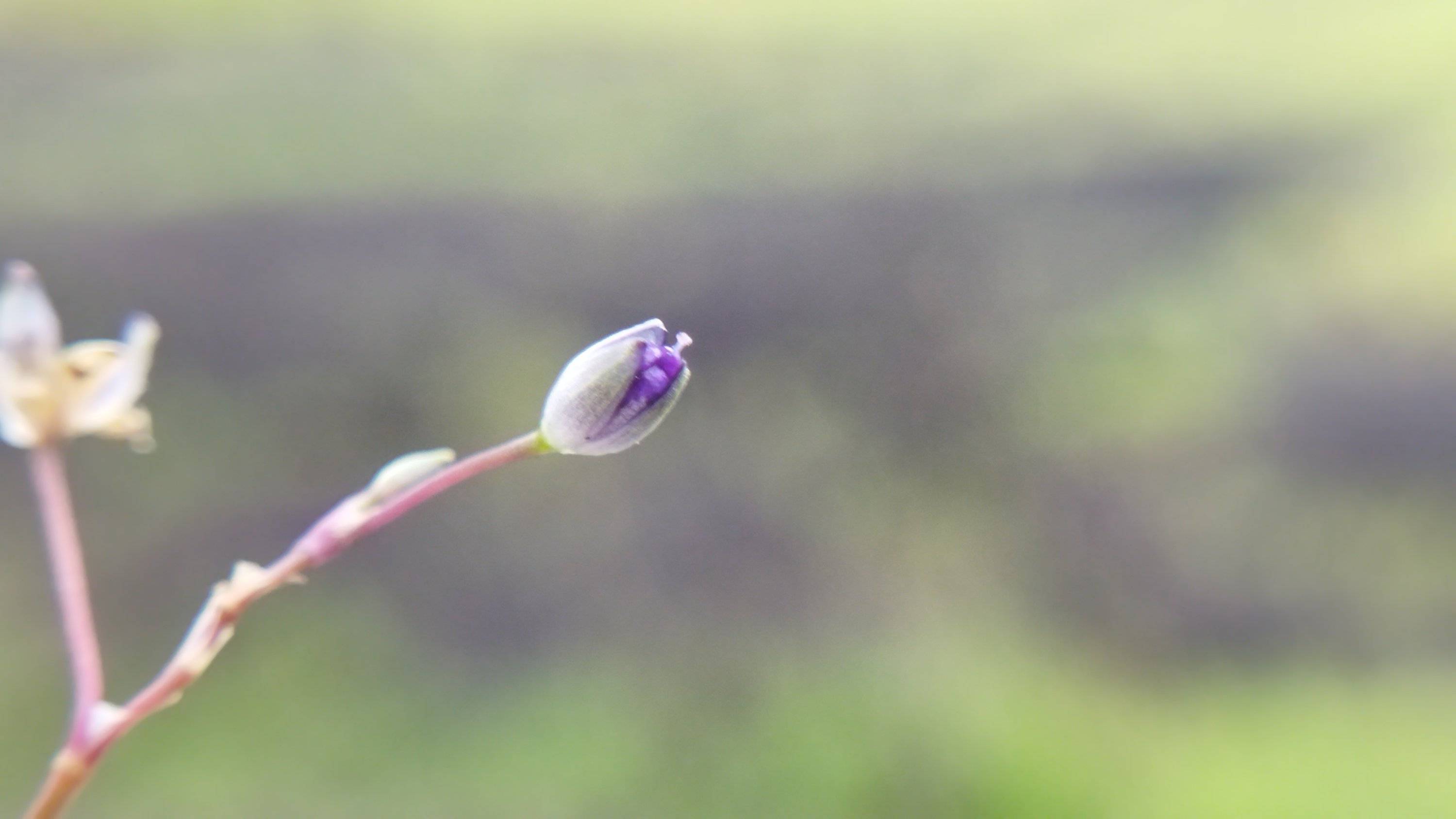
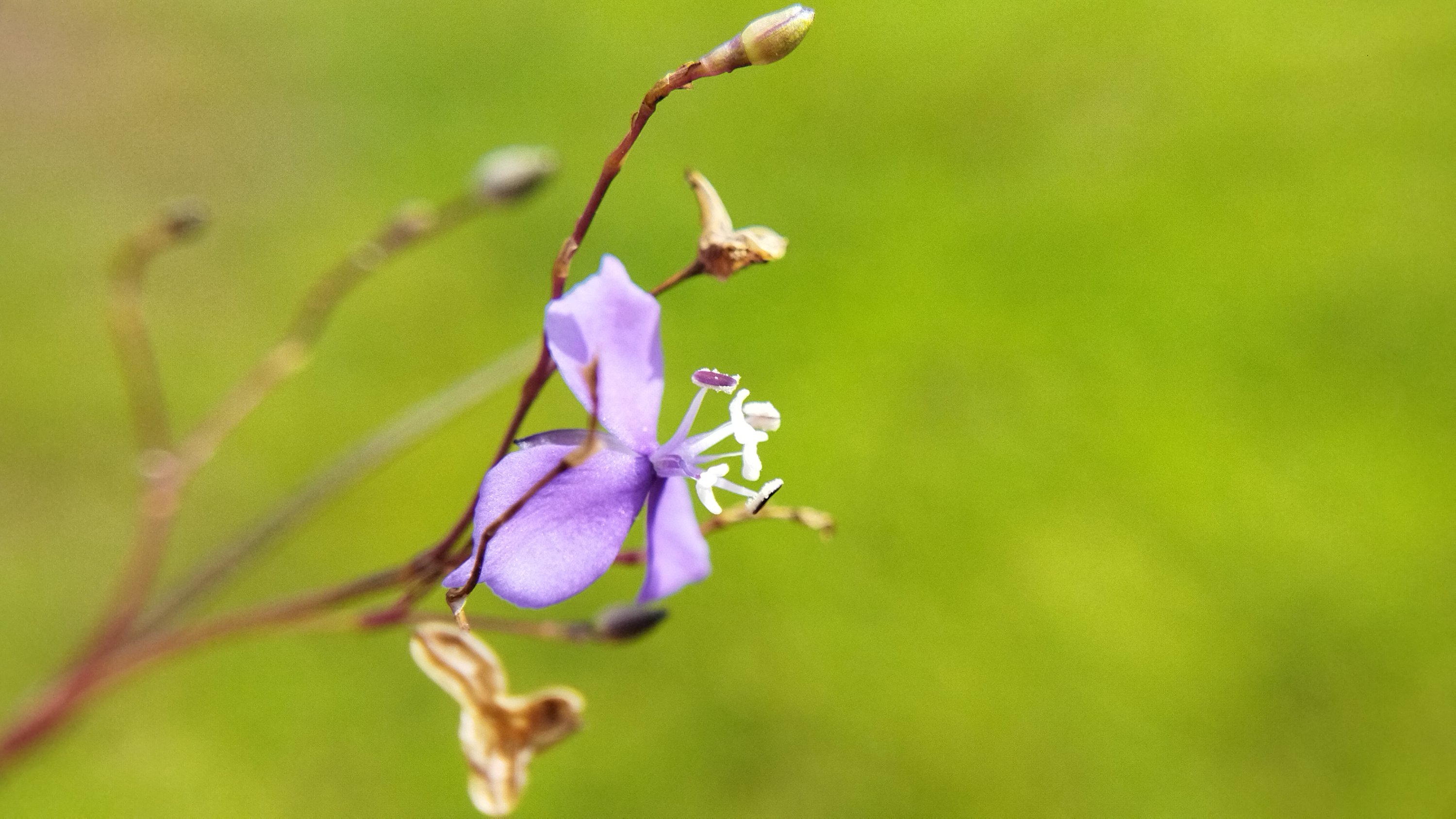
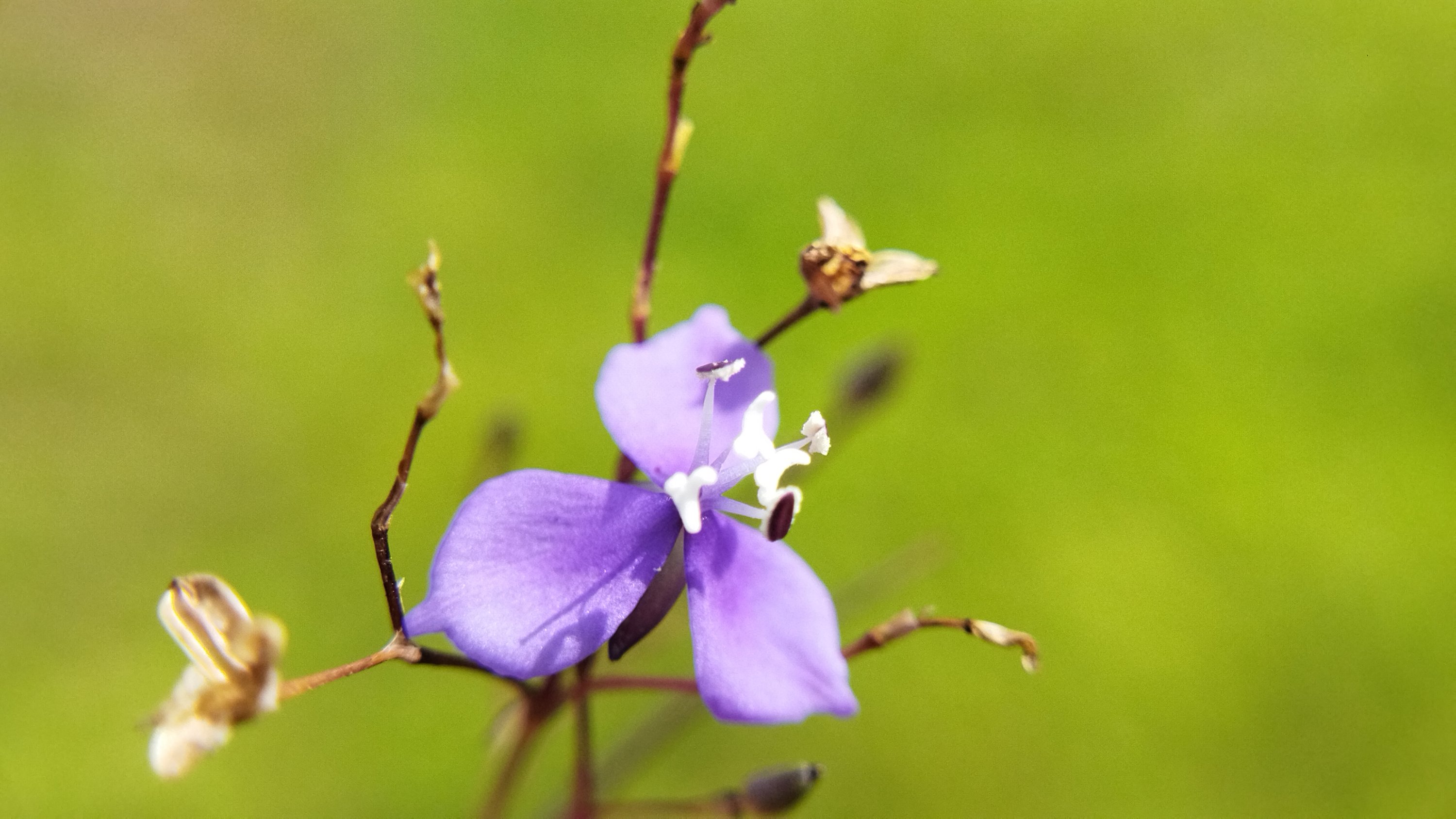
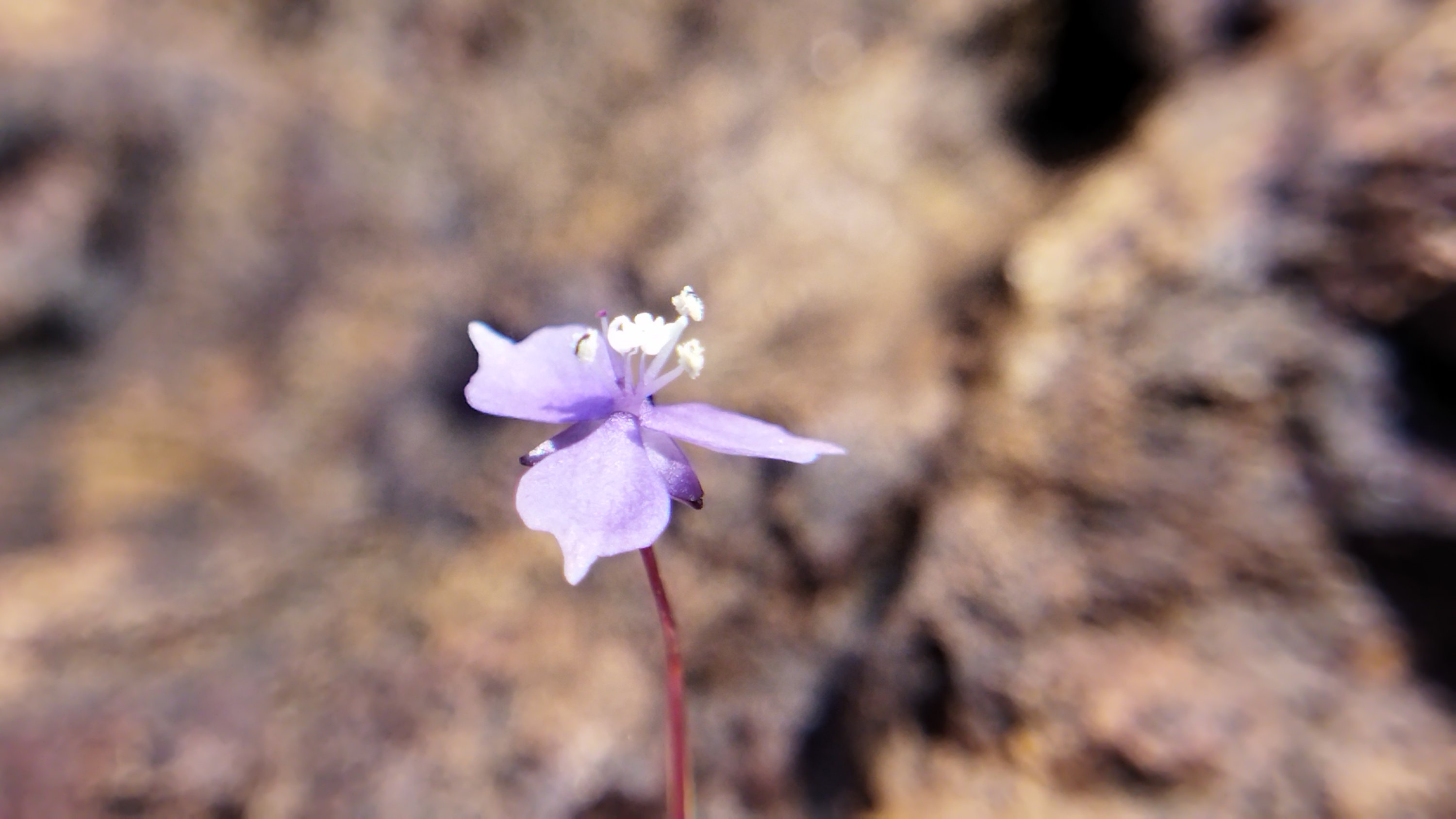
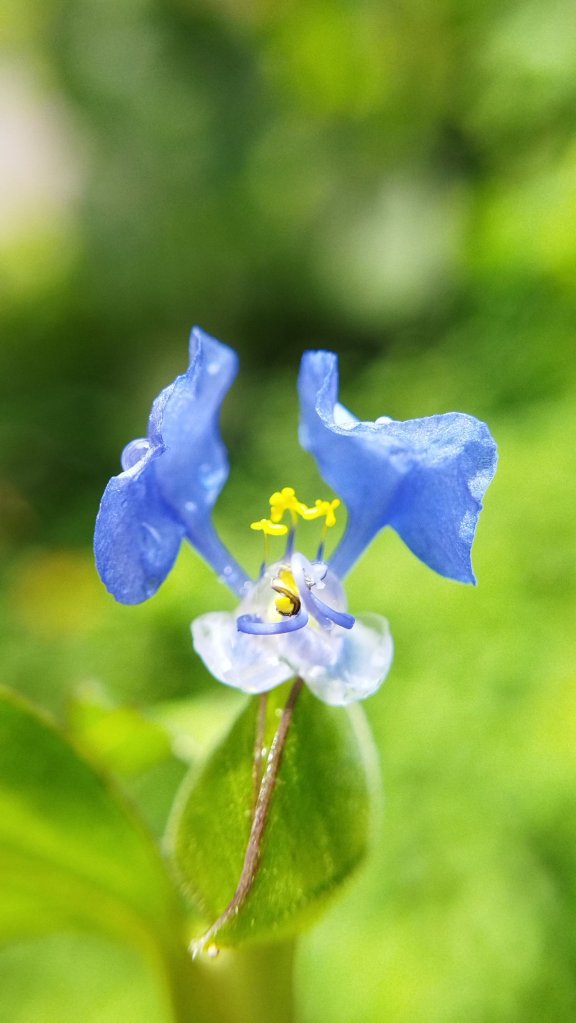
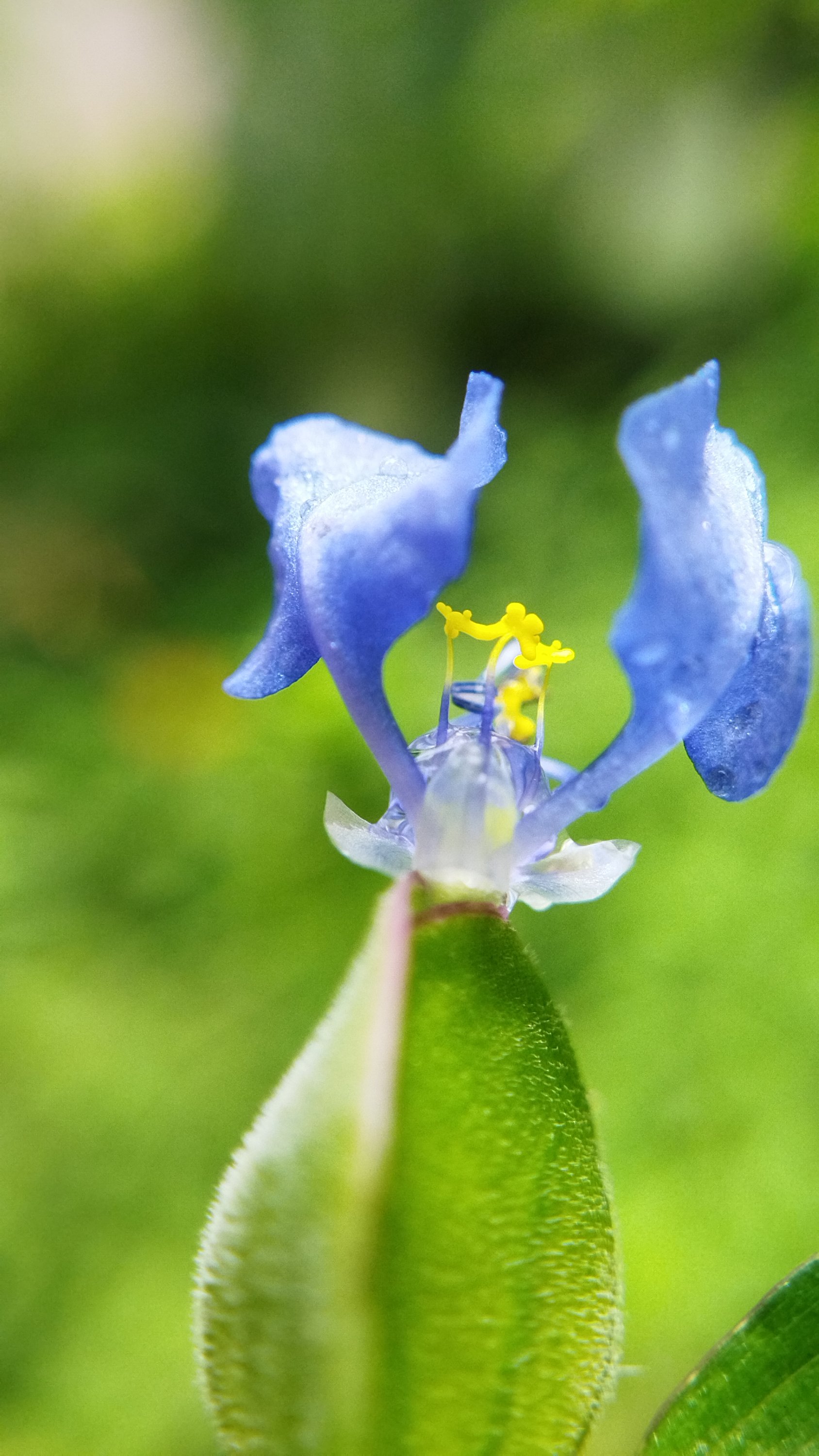
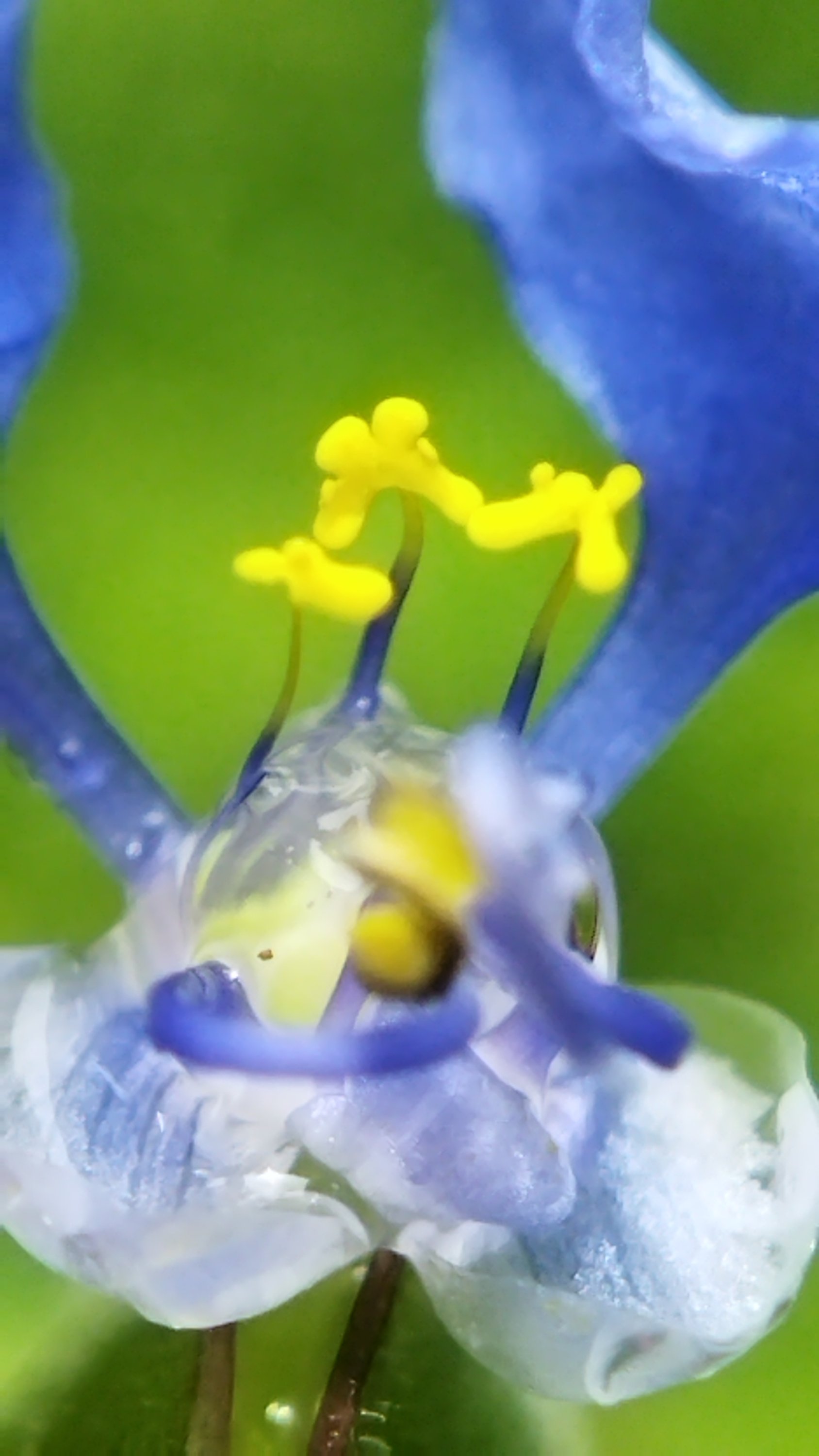
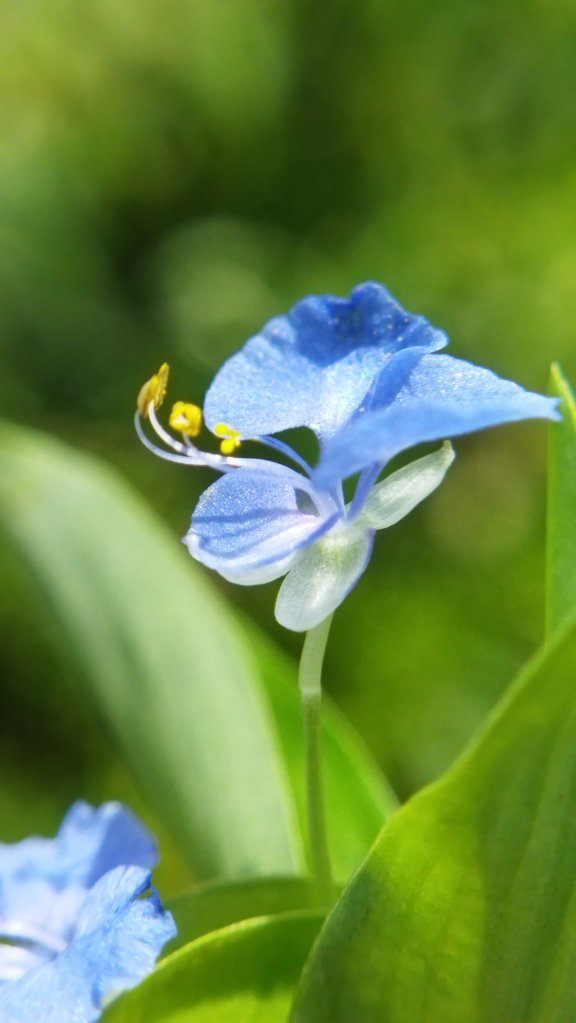
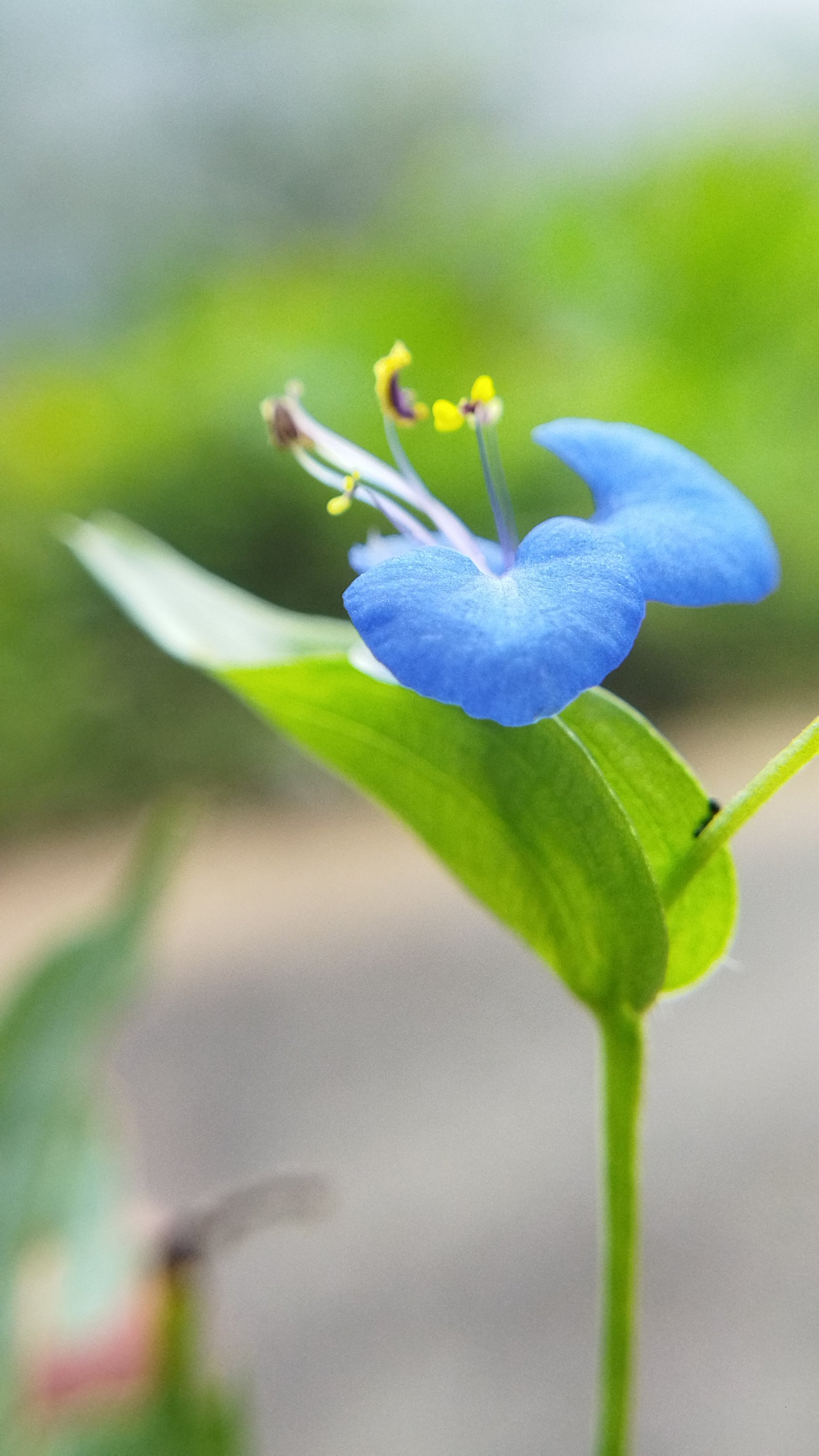
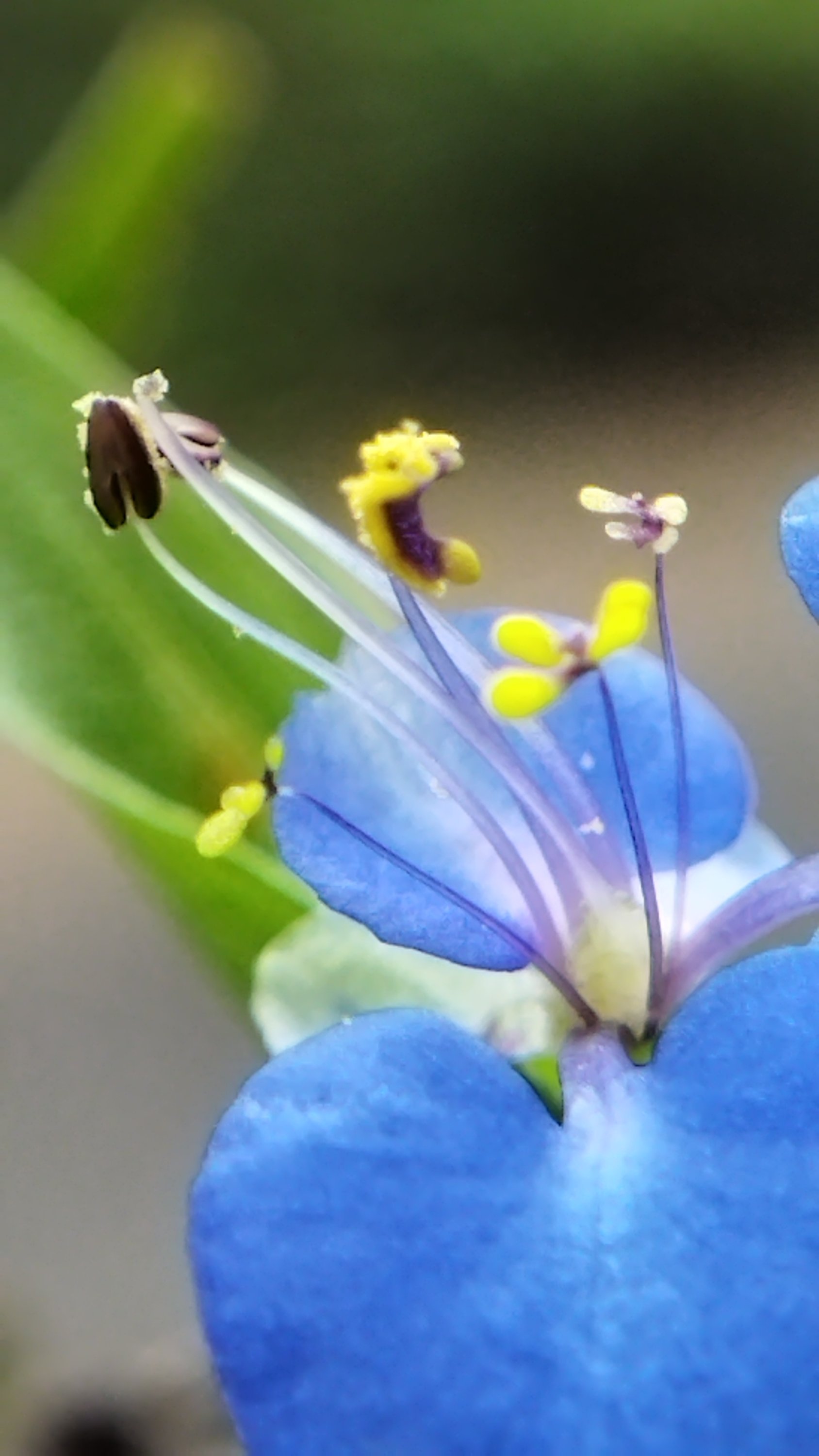
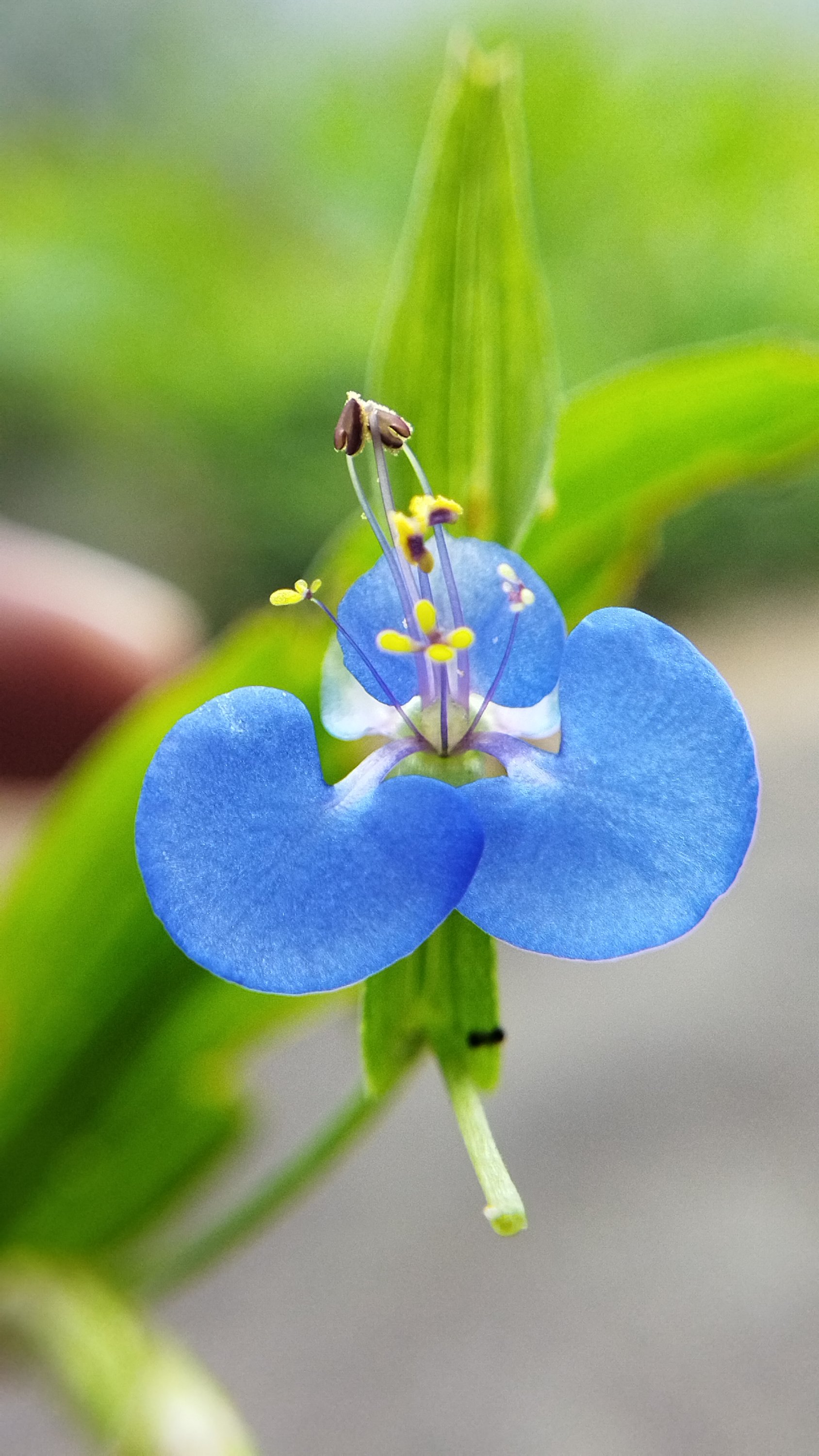
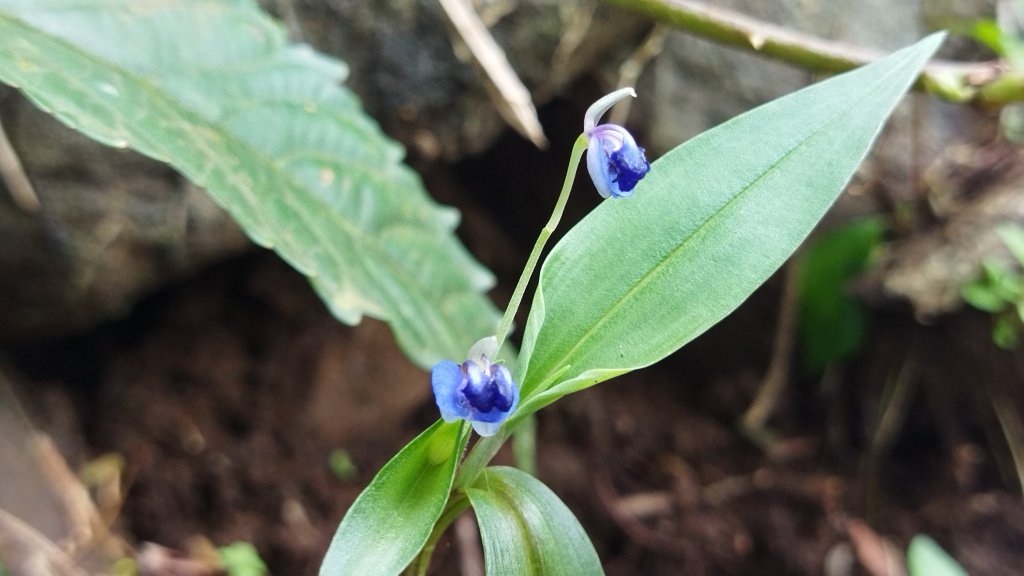
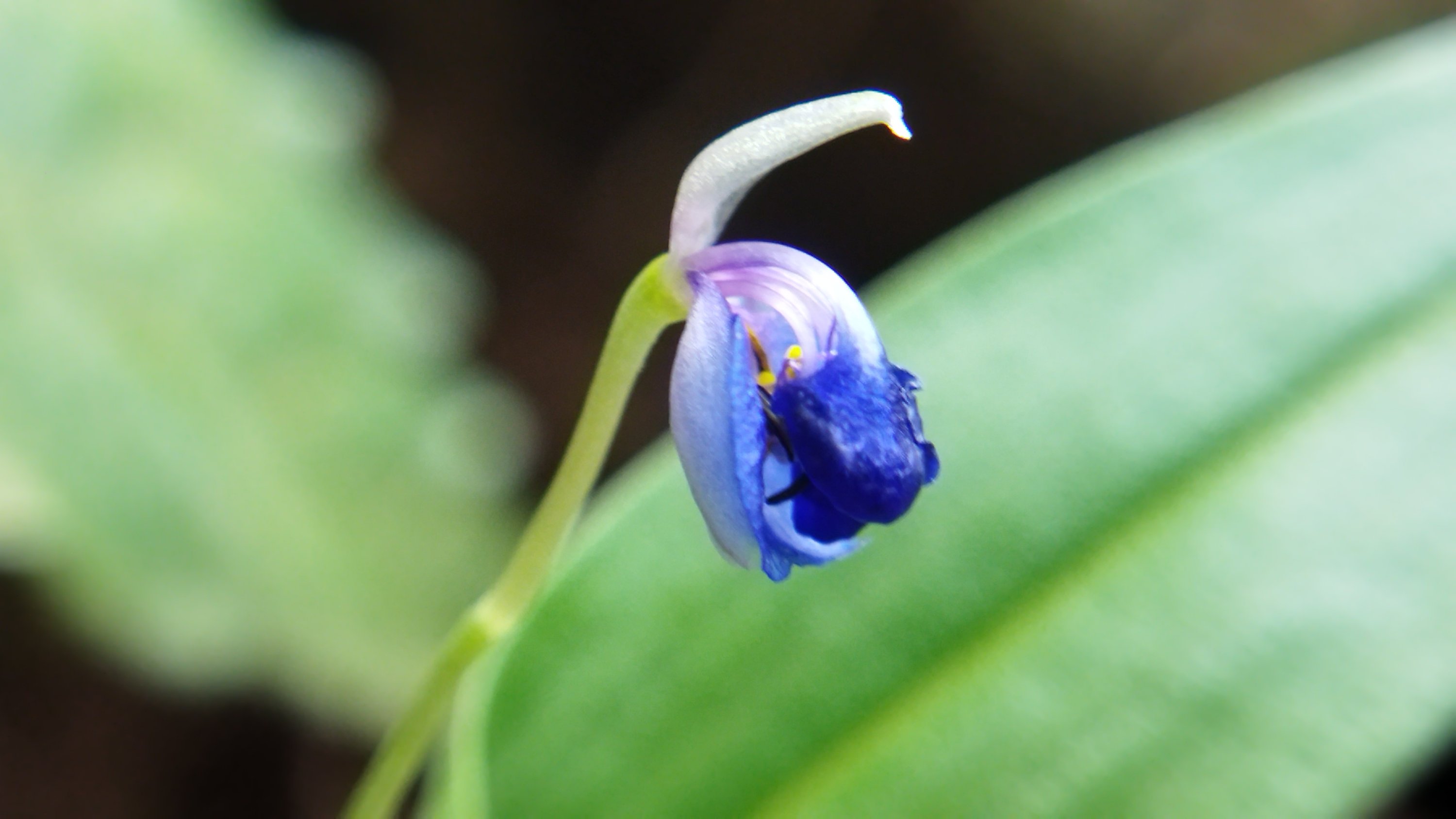
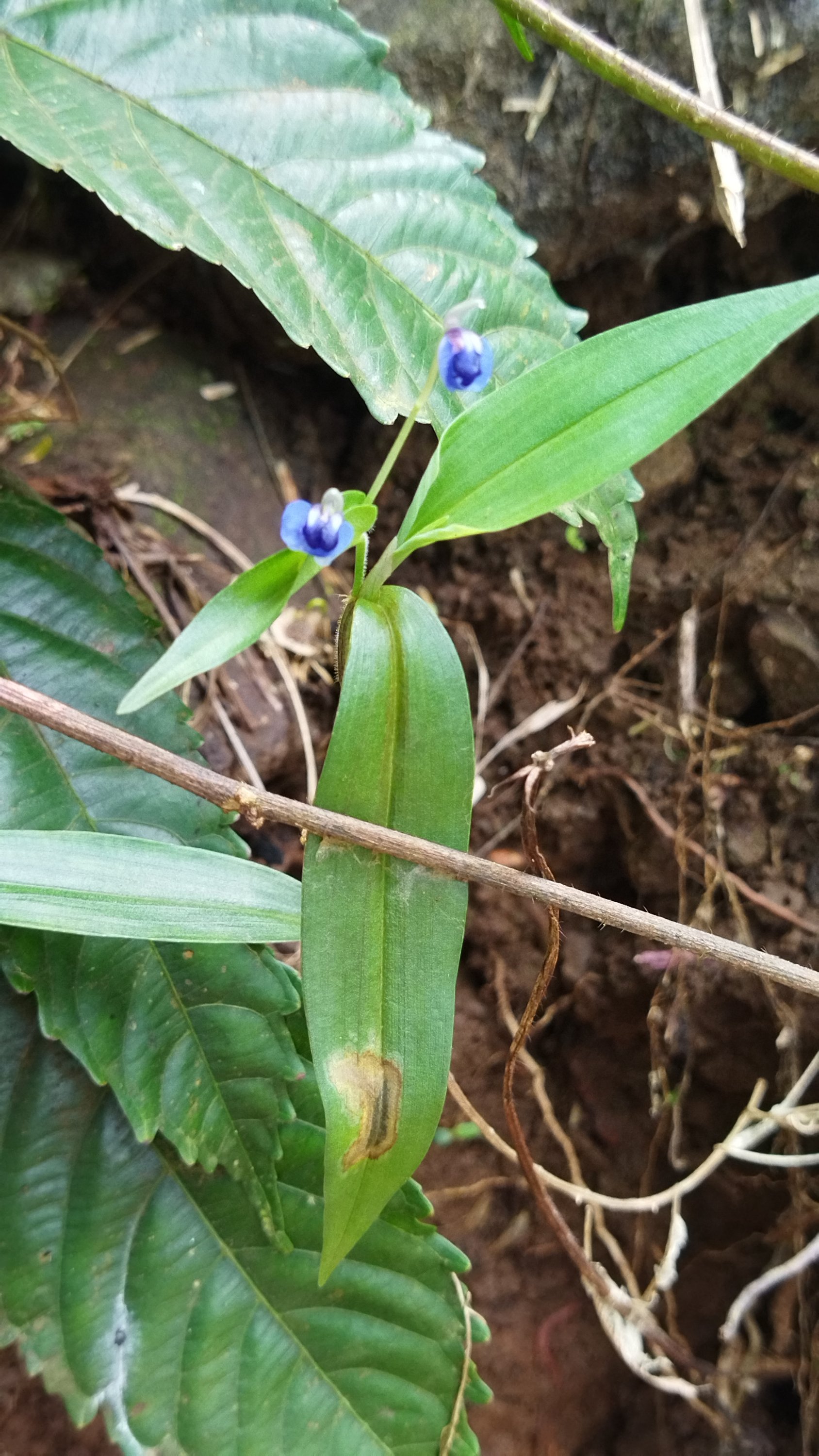
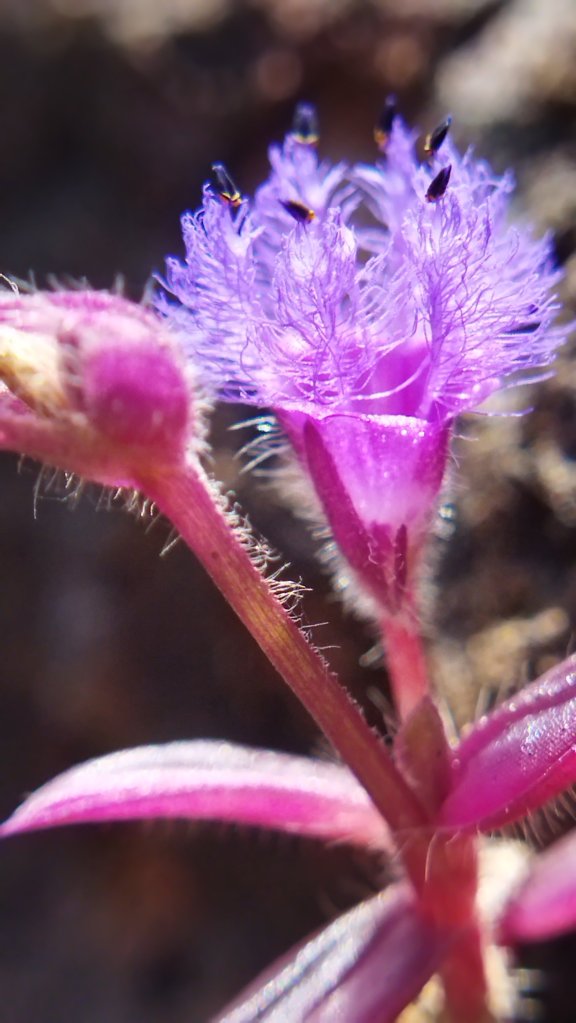
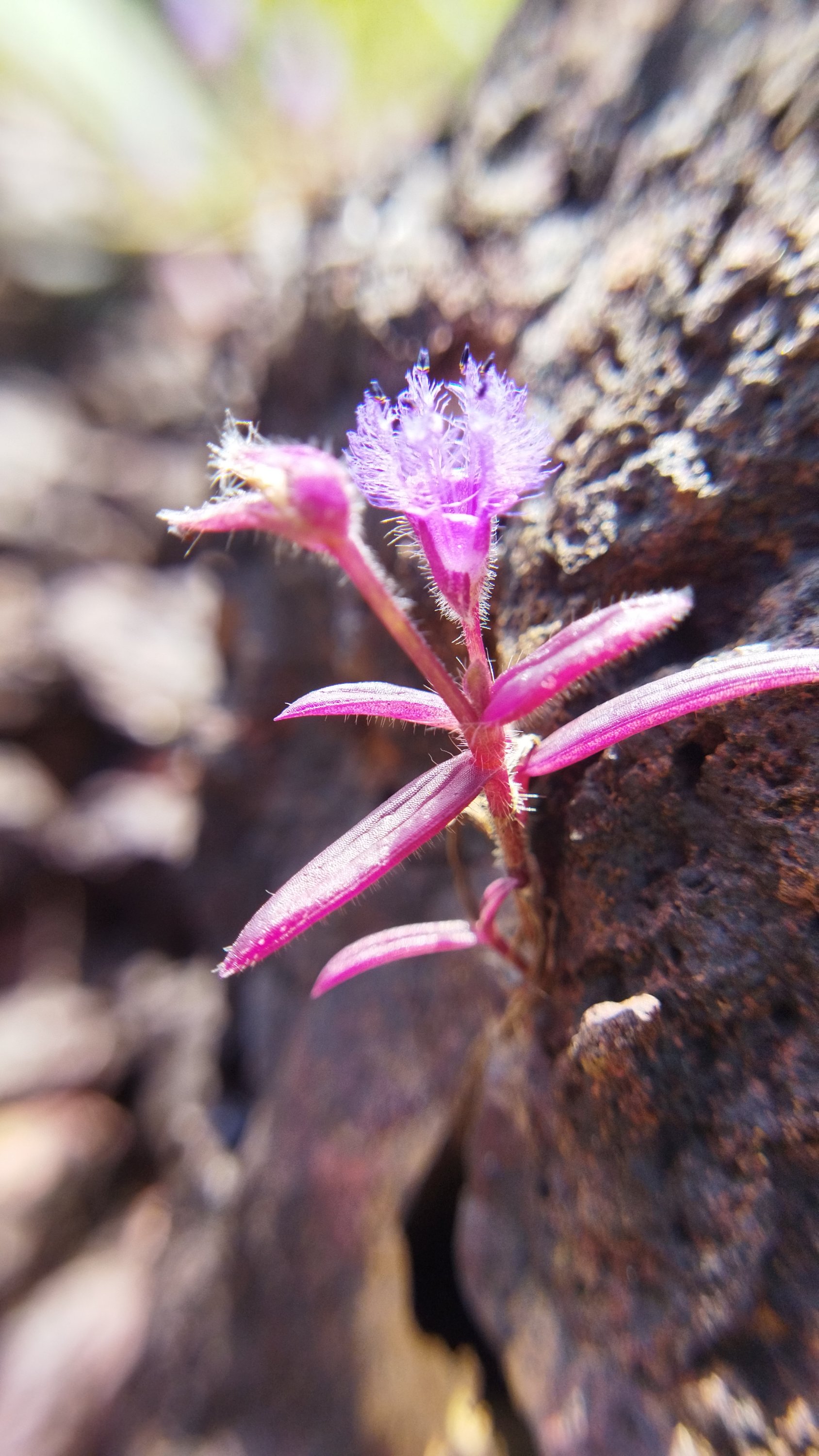
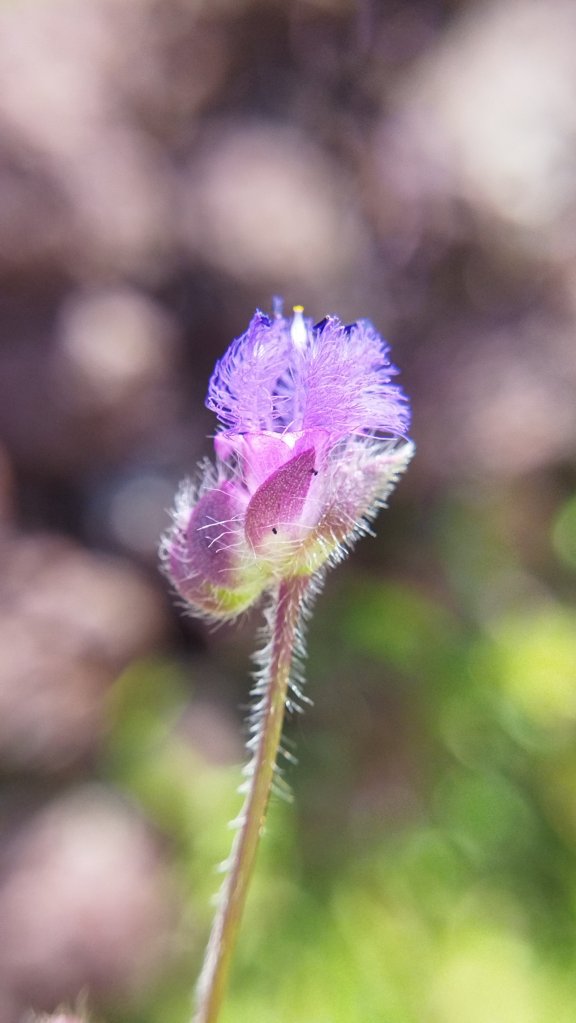
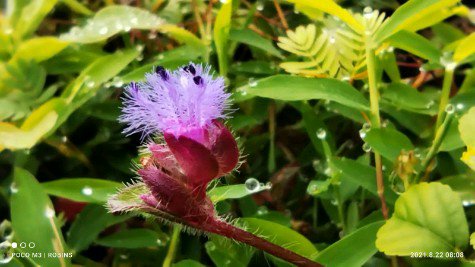
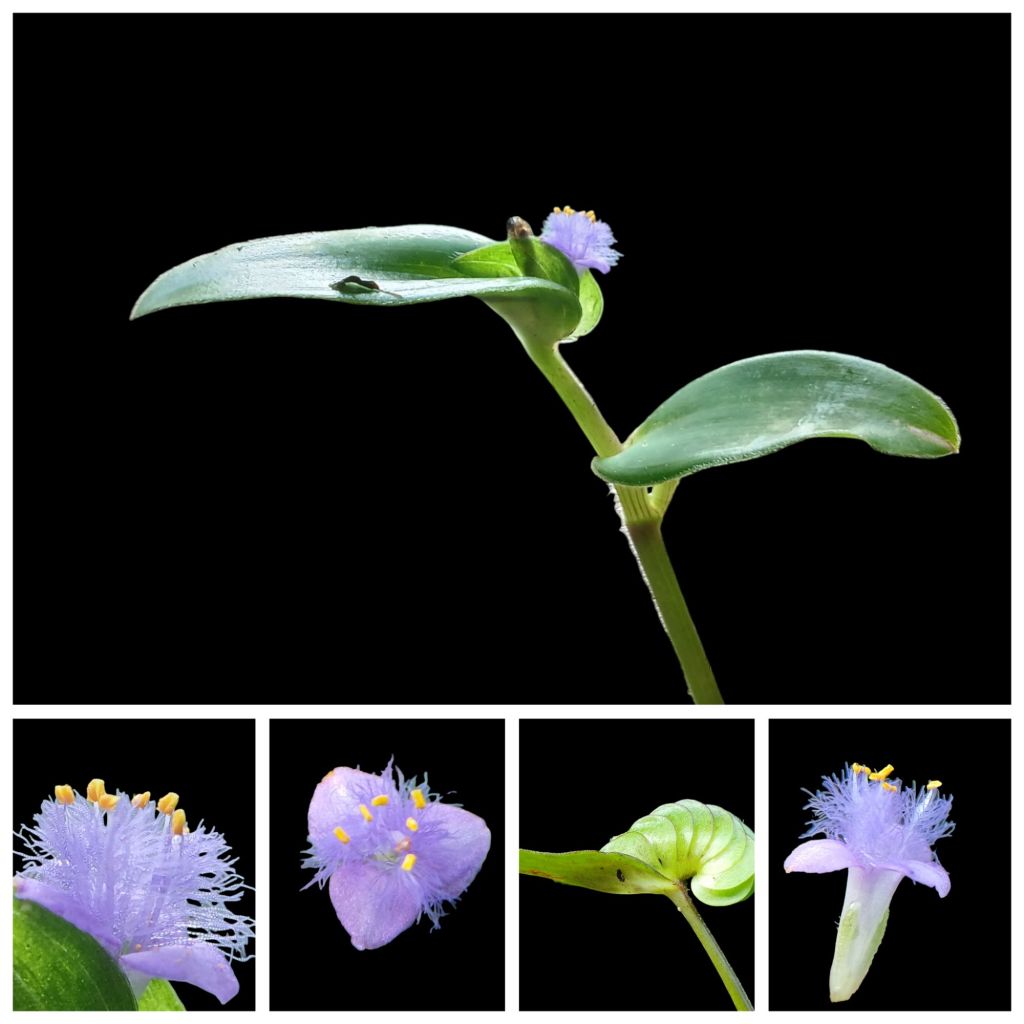
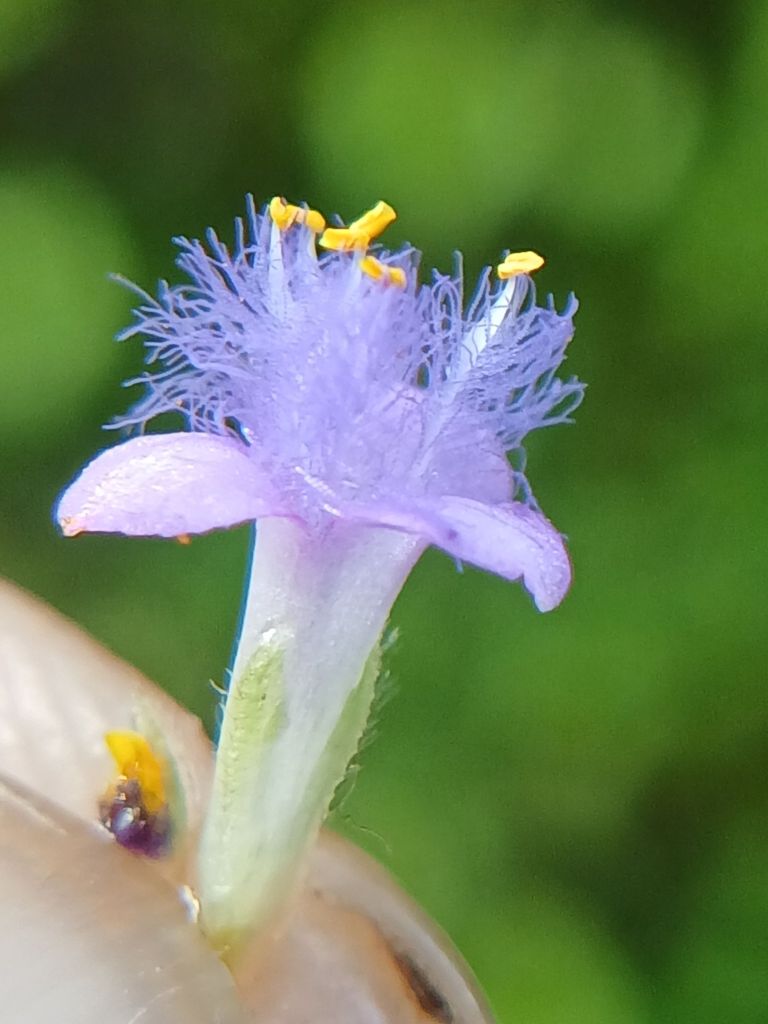
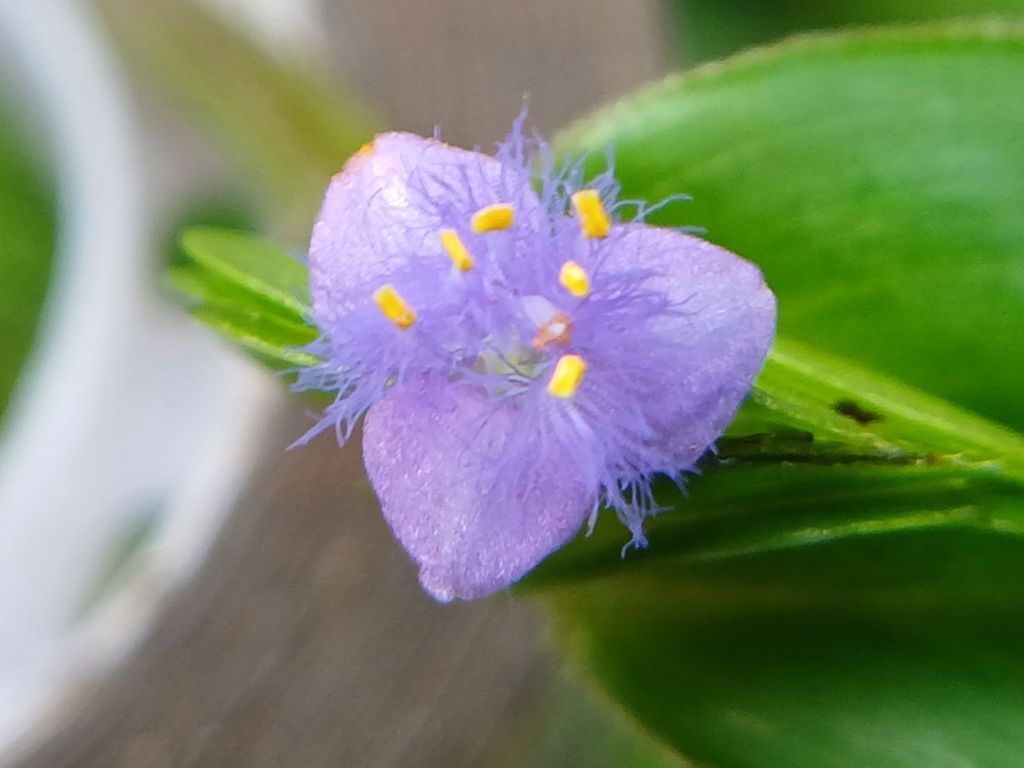
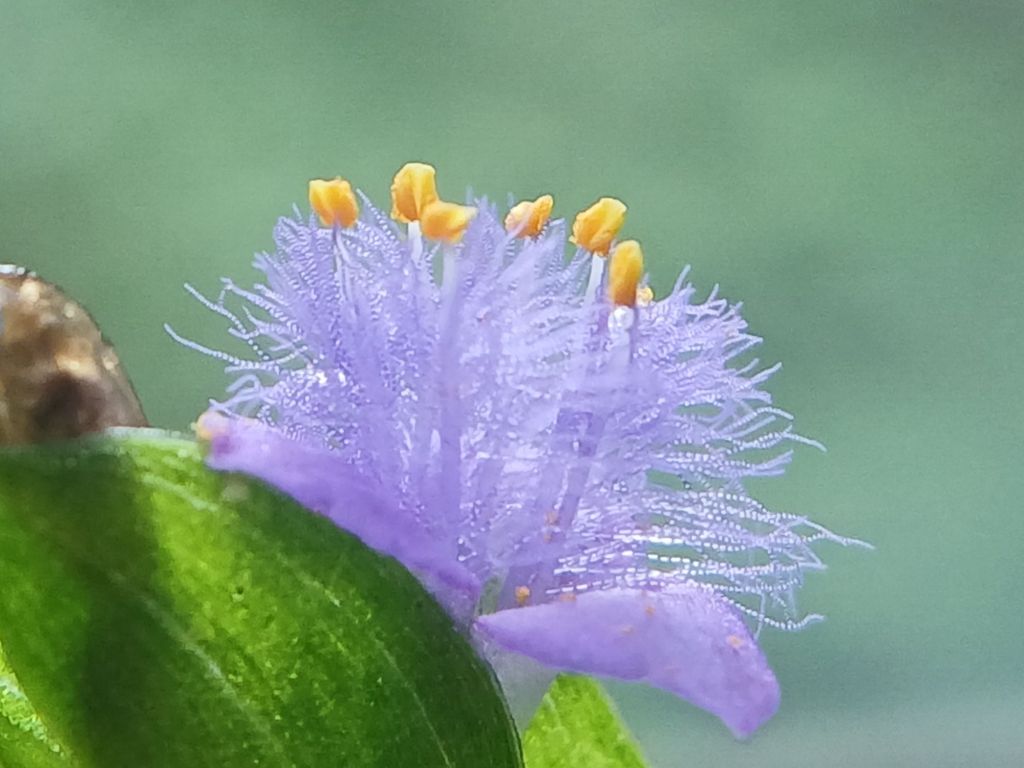
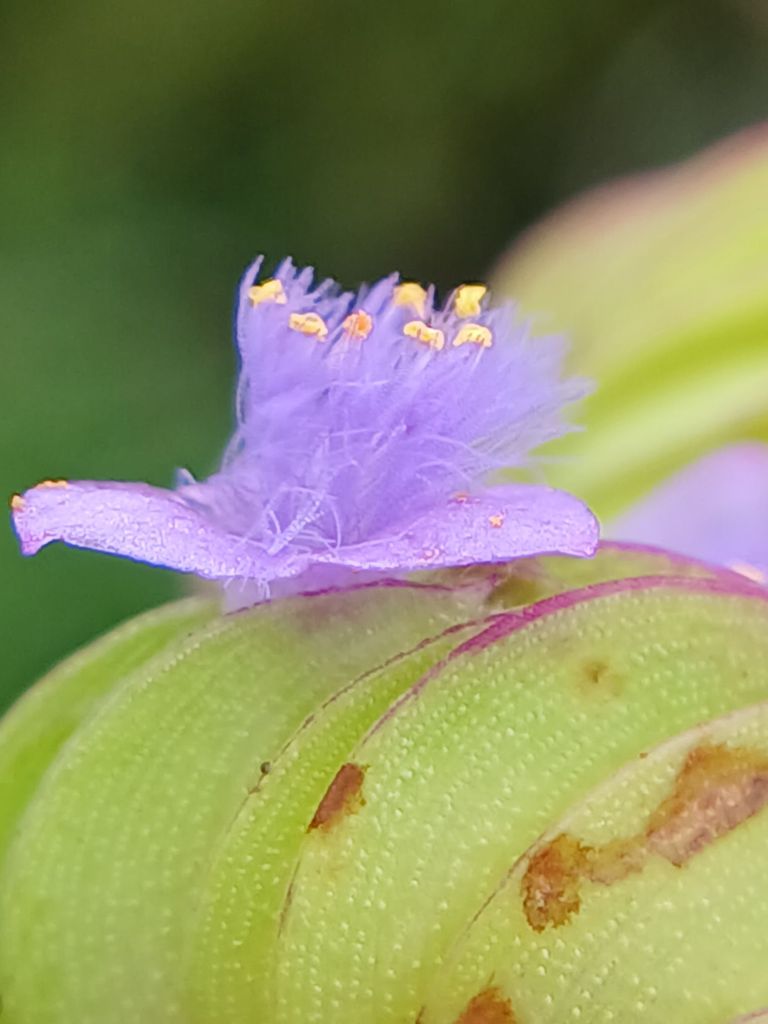
കിഴങ്ങിൽ നിന്നും മുളക്കുന്ന Pseudostem ഉള്ള ഒരു ചെറു ഓഷധിയാണിത്. ഇലകൾ ഏകാന്തരം. മുകളറ്റത്ത് പൂക്കുല ഉണ്ടാവുന്നു.പൂവിൽ മൂന്ന് ദളങ്ങൾ,ആറോളം കേസരങ്ങൾ. കേസരങ്ങൾ മഞ്ഞയും വെള്ളയും കളറിൽ. കേസരങ്ങളോടൊപ്പം അനേകം നാരുകൾ കാണാം.
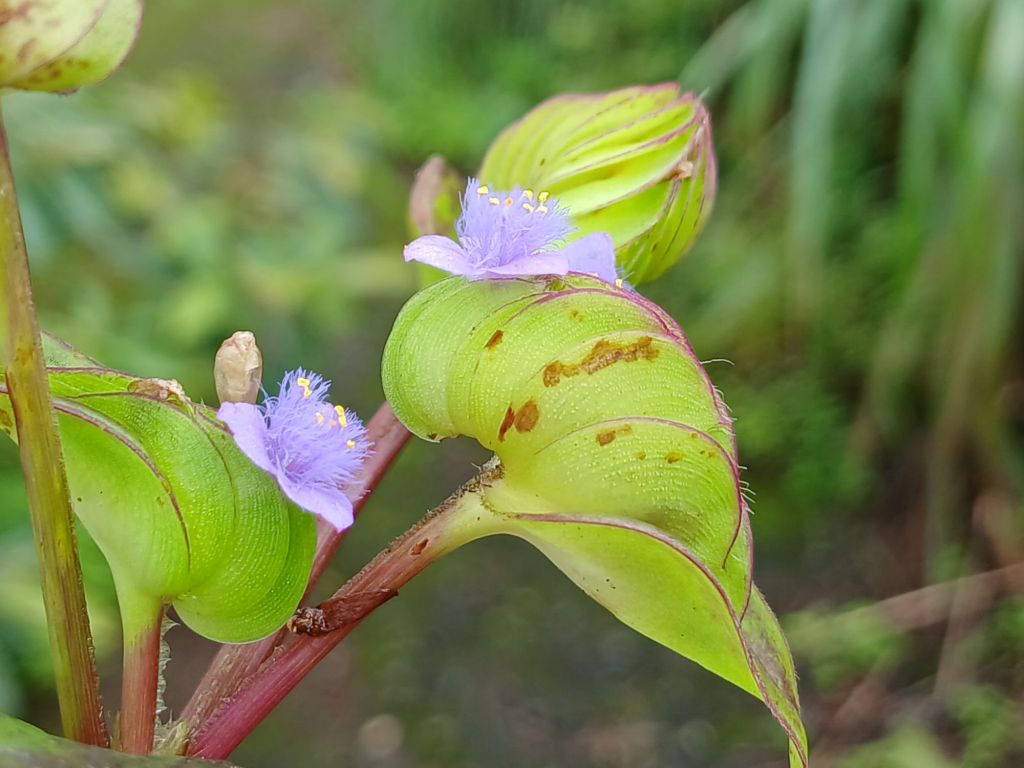
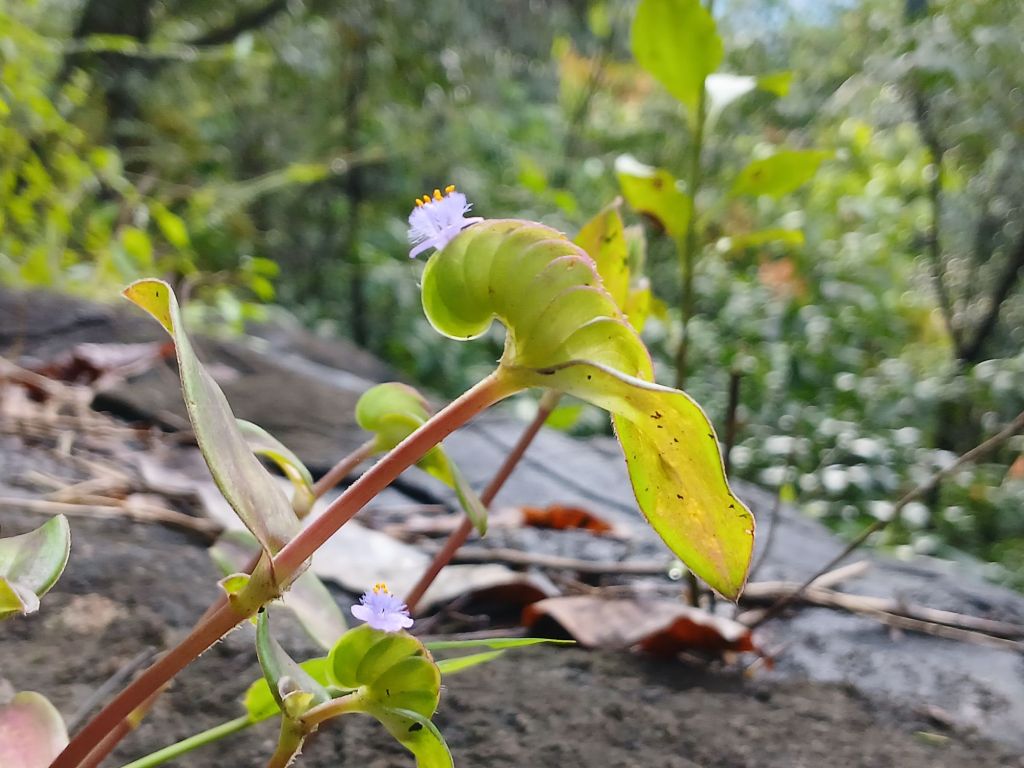
Commelina benghalensis, commonly known as the Bengal dayflower or tropical spiderwort, is a fast-growing and invasive herbaceous plant. It belongs to the family Commelinaceae and is widely distributed across tropical and subtropical regions of the world. This species is known for its resilience, rapid spreading ability, and distinctive blue flowers.
Scientific classification
Kingdom : plantae
Clade : Monocots
Order : commelinales
Family : Commelinaceae
Genus : commelina
Species : C.benghalensis
Morphology
1. Habit:
A spreading, prostrate, or ascending herbaceous plant with a creeping or trailing growth habit.
It can root at nodes and spread vigorously, especially in moist conditions.
2. Roots:
Fibrous root system with adventitious roots emerging from the nodes.
3. Stem:
Succulent, branched, and trailing or ascending.
Nodes are swollen and capable of producing roots.
4. Leaves:
Simple, alternate, and ovate to lanceolate in shape.
The base is often sheathed, enclosing the stem.
Leaf margins are entire, and the surface is hairy or glabrous.
5. Inflorescence:
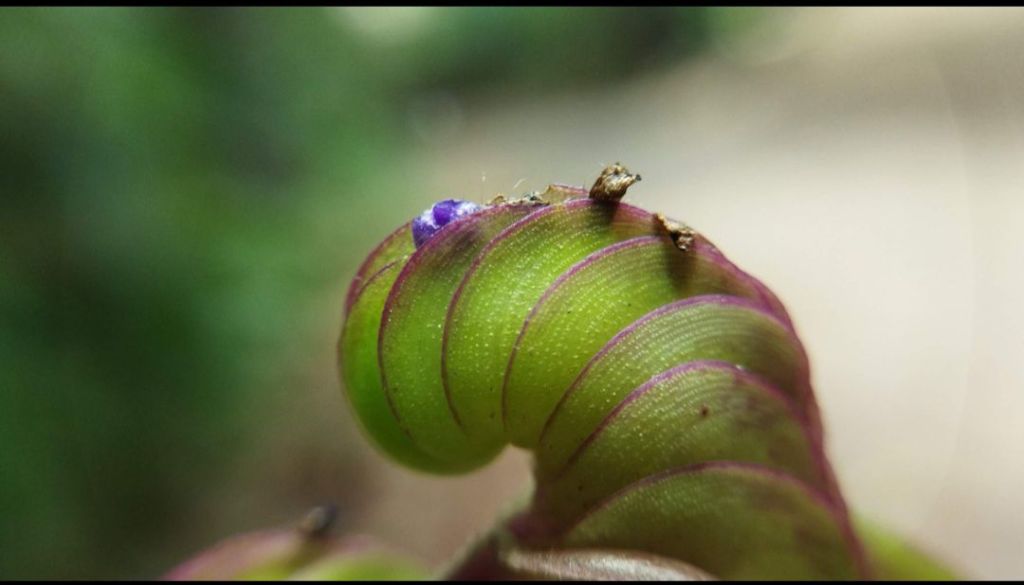
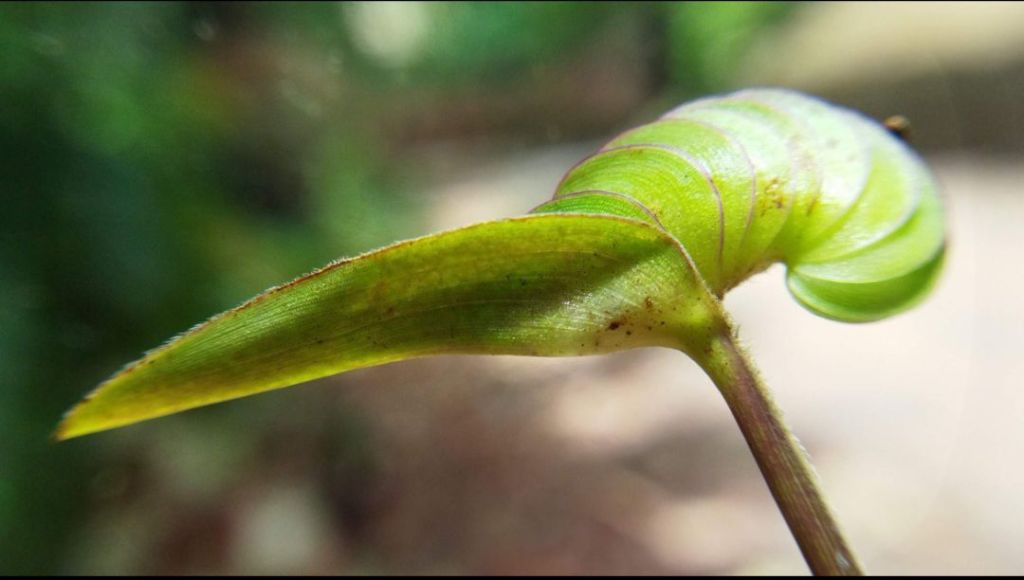
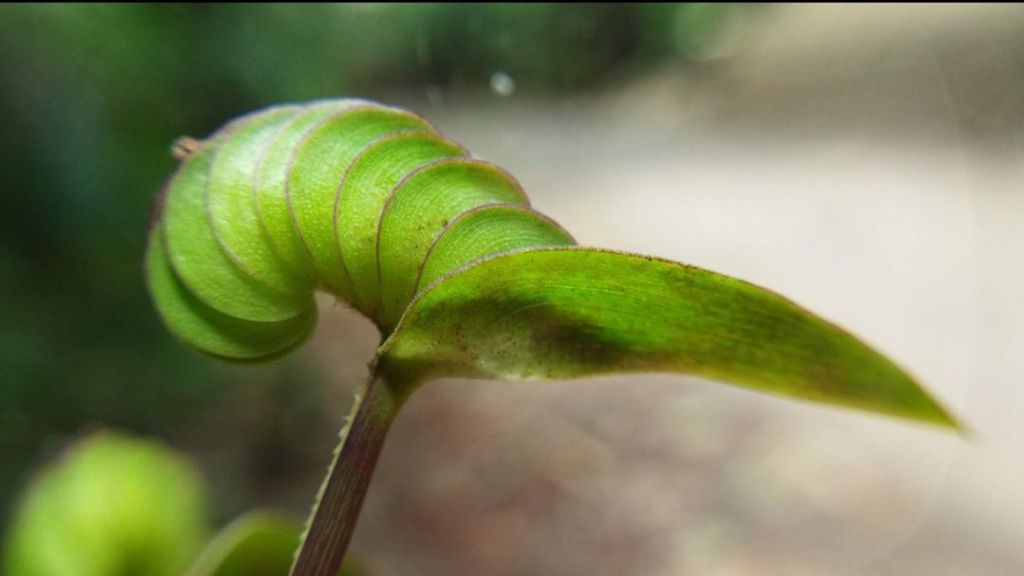
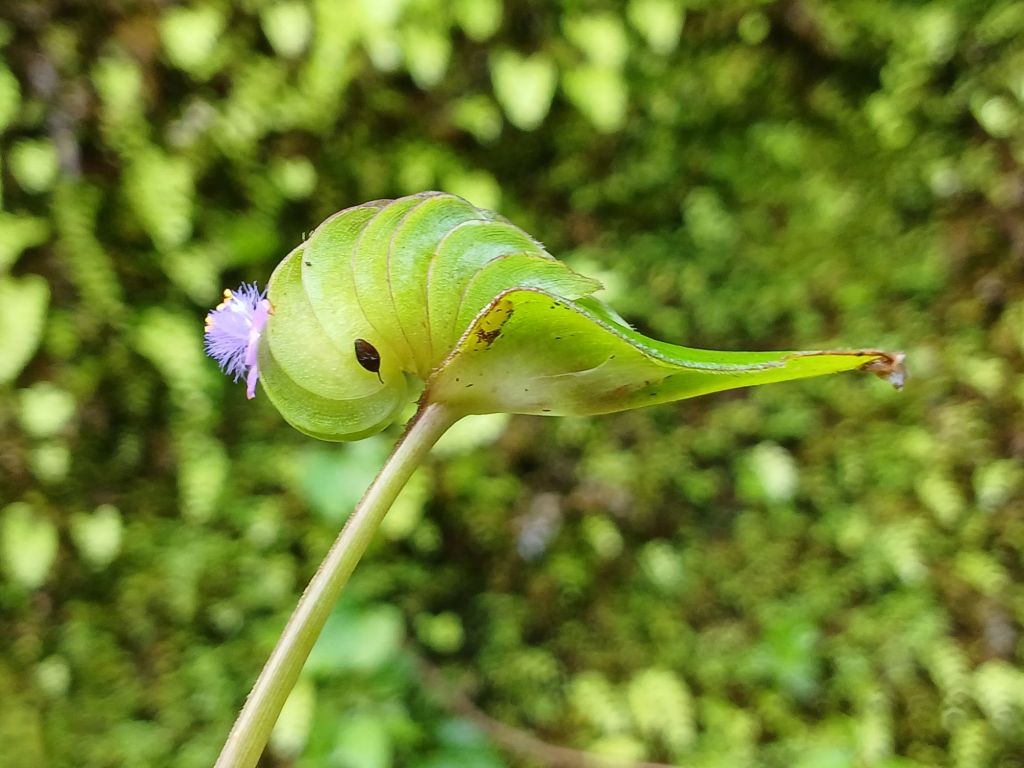
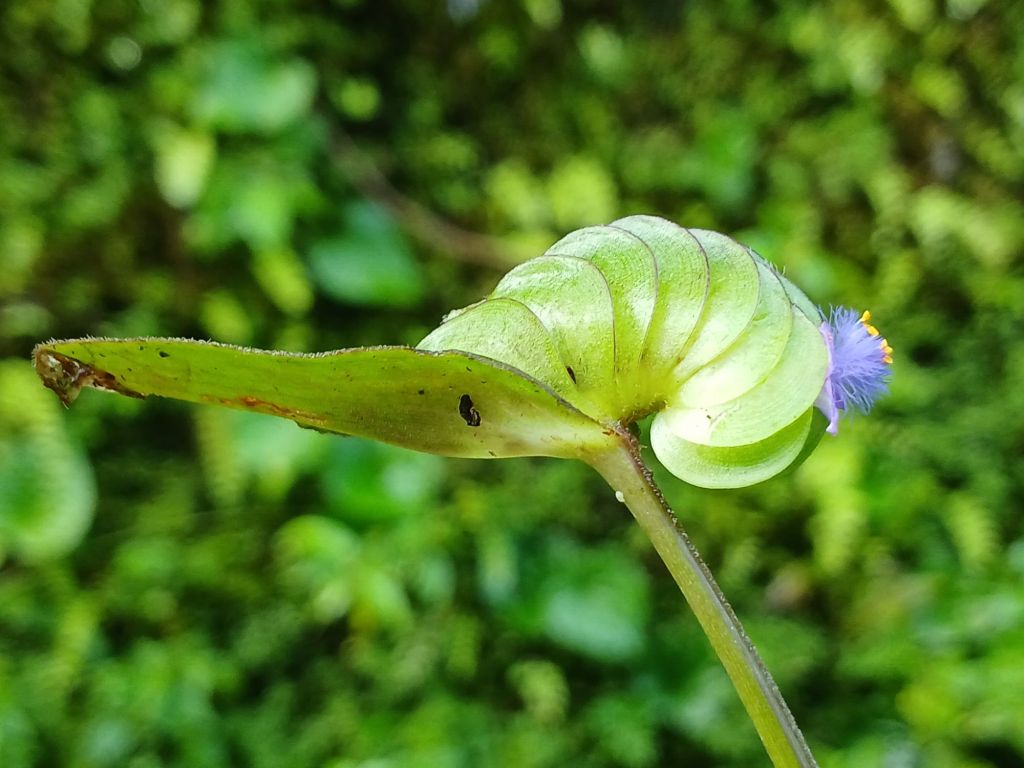
Cymose inflorescence, enclosed by a boat-shaped, folded bract (spathe).
The spathe is green and often hairy.
6. Flowers:
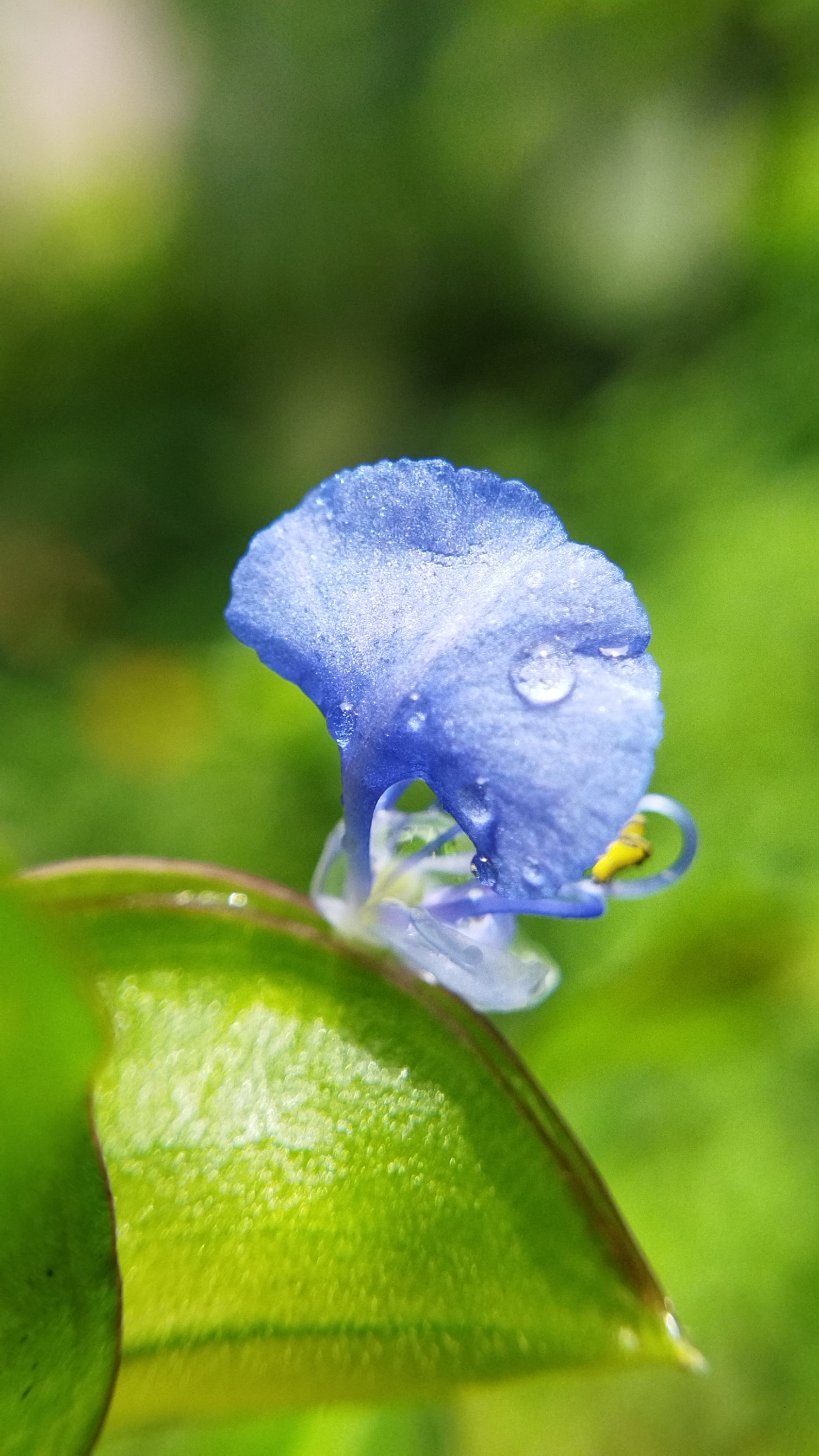
Zygomorphic and bisexual with three petals:
Two large, blue petals (posterior)
One small, inconspicuous white petal (anterior)
Six stamens:
Three are fertile with prominent anthers.
Three are sterile (staminodes) with small or non-functional anthers.
The ovary is superior, three-celled, with a single style.
7. Fruit:
Capsule, dehiscent, containing 2-5 seeds.
Each seed is wrinkled or ridged.
8. Seed:
Small, brownish, rough-textured, and capable of prolonged dormancy.
Can propagate both sexually (by seeds) and asexually (by stem fragments and rooting nodes).
9. Special Features:
Can produce subterranean cleistogamous (self-pollinating) flowers, which directly produce seeds underground.
Considered a problematic weed in many agricultural regions due to its rapid spreading ability.
Habitat
This plant thrives in tropical and subtropical climates,Agricultural fields
Roadsides and waste areas
Lawns and gardens
Moist and disturbed soils
Range
Native to: Andaman Is., Angola, Assam, Bangladesh, Benin, Botswana, Burkina, Burundi, Cambodia, Cameroon, Cape Provinces, Cape Verde, Central African Republic, Chad, China North-Central, China South-Central, China Southeast, Comoros, Congo, Djibouti, East Himalaya, Equatorial Guinea, Eritrea, Ethiopia, Free State, Gambia, Ghana, Guinea, Guinea-Bissau, Gulf of Guinea Is., Hainan, India, Ivory Coast, Japan, Jawa, Kazan-retto, Kenya, Korea, KwaZulu-Natal, Lesotho, Liberia, Malawi, Malaya, Maldives, Mali, Mauritania, Mozambique, Myanmar, Namibia, Nansei-shoto, Nepal, Nicobar Is., Niger, Nigeria, Northern Provinces, Ogasawara-shoto, Pakistan, Philippines, Rwanda, Saudi Arabia, Senegal, Seychelles, Sierra Leone, Socotra, Somalia, South China Sea, Sri Lanka, Sudan, Swaziland, Taiwan, Tanzania, Thailand, Togo, Uganda, Vietnam, West Himalaya, Yemen, Zambia, Zaïre, Zimbabwe
Introduced into: Alabama, Bolivia, Brazil Northeast, Brazil Southeast, Brazil West-Central, California, Canary Is., Chagos Archipelago, Christmas I., Cuba, Egypt, Florida, French Guiana, Georgia, Hawaii, Honduras, Jamaica, Leeward Is., Louisiana, Madeira, New South Wales, North Carolina, Paraguay, Puerto Rico, Queensland, Samoa, Tonga, Transcaucasus, Vanuatu, Windward Is.
Habitat = Grasslands, degraded forest areas and wastelands
Family = Commelinaceae
Native = Indo-Malayan biosphere, Ethiopia
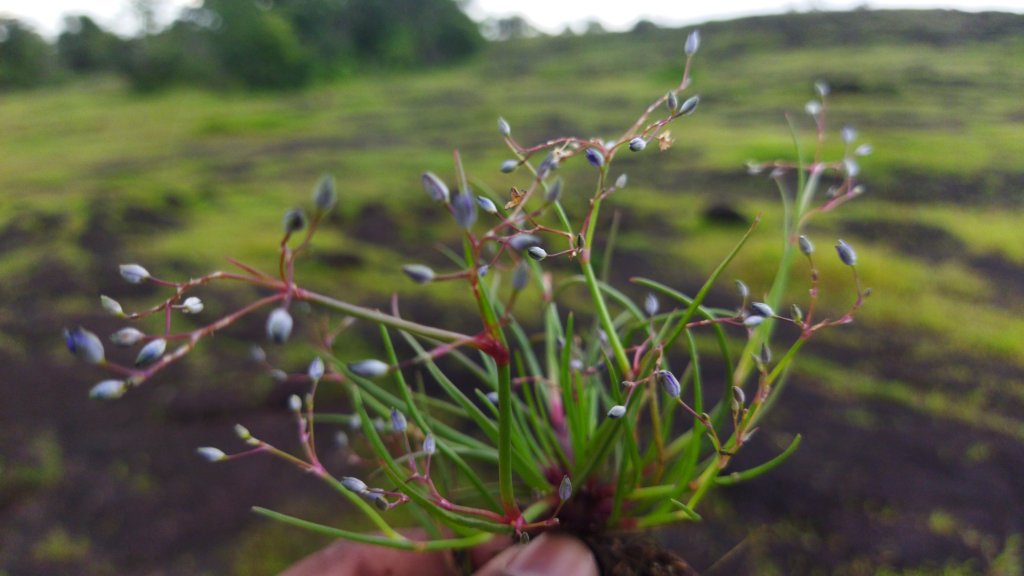
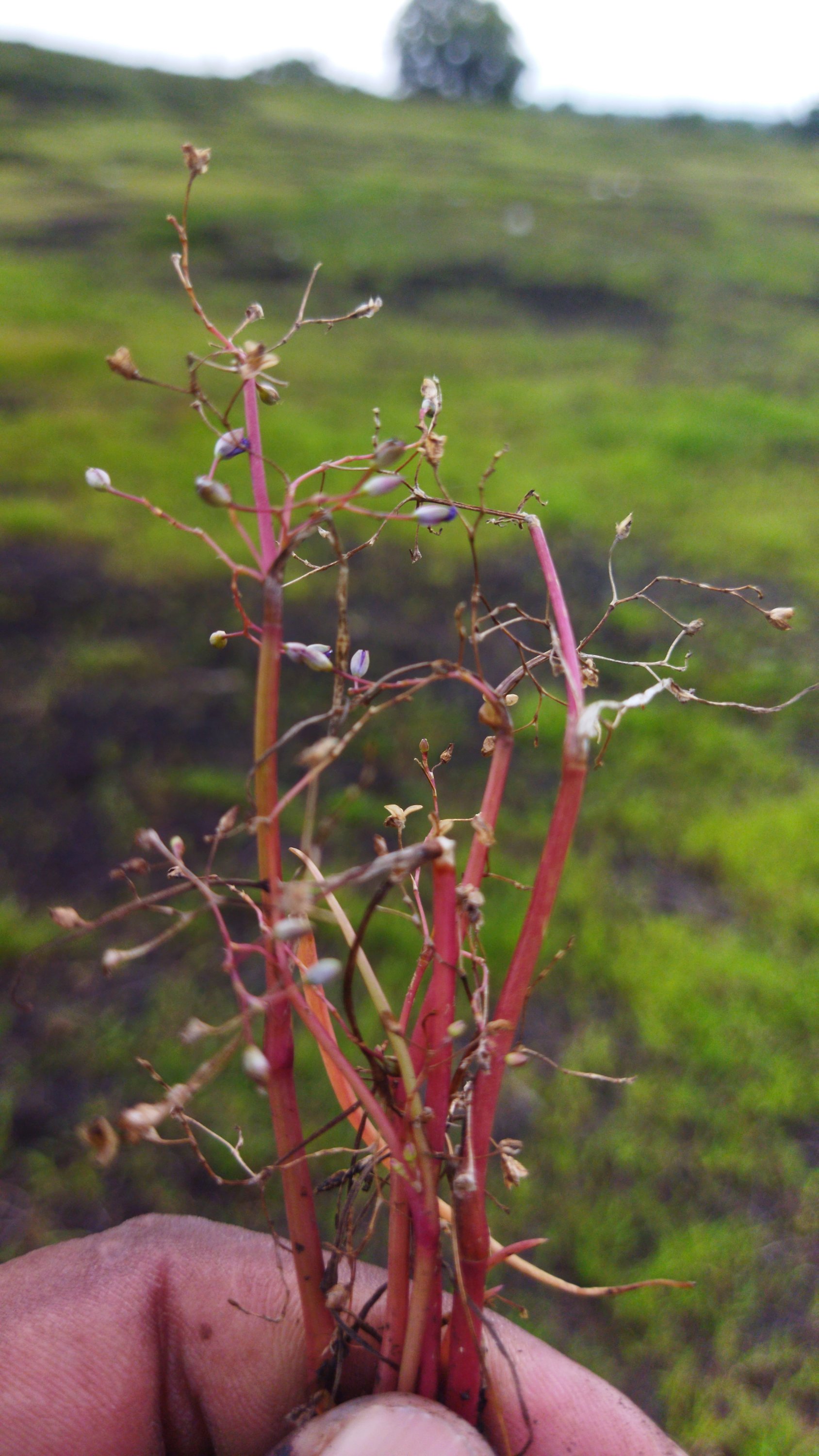
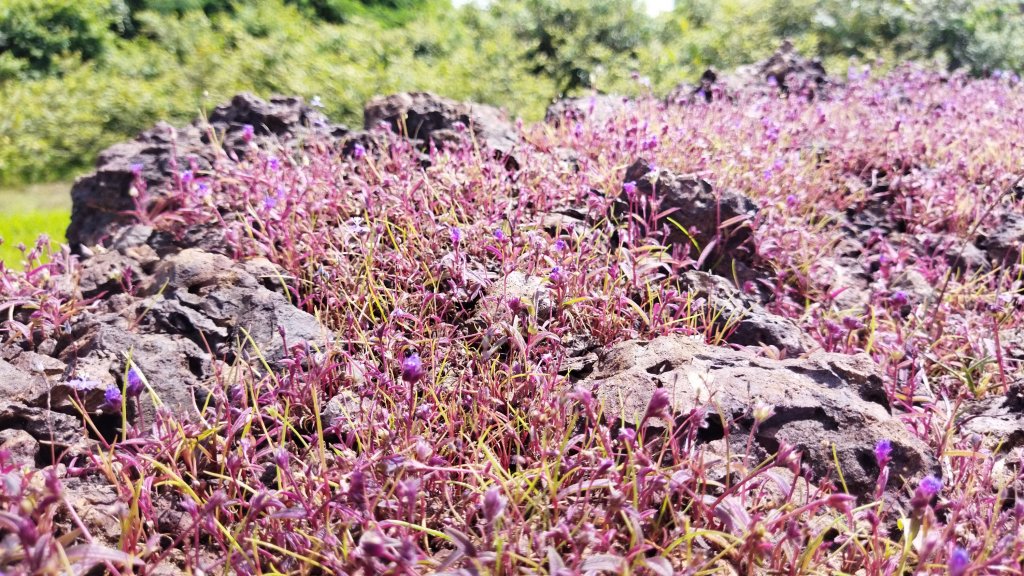
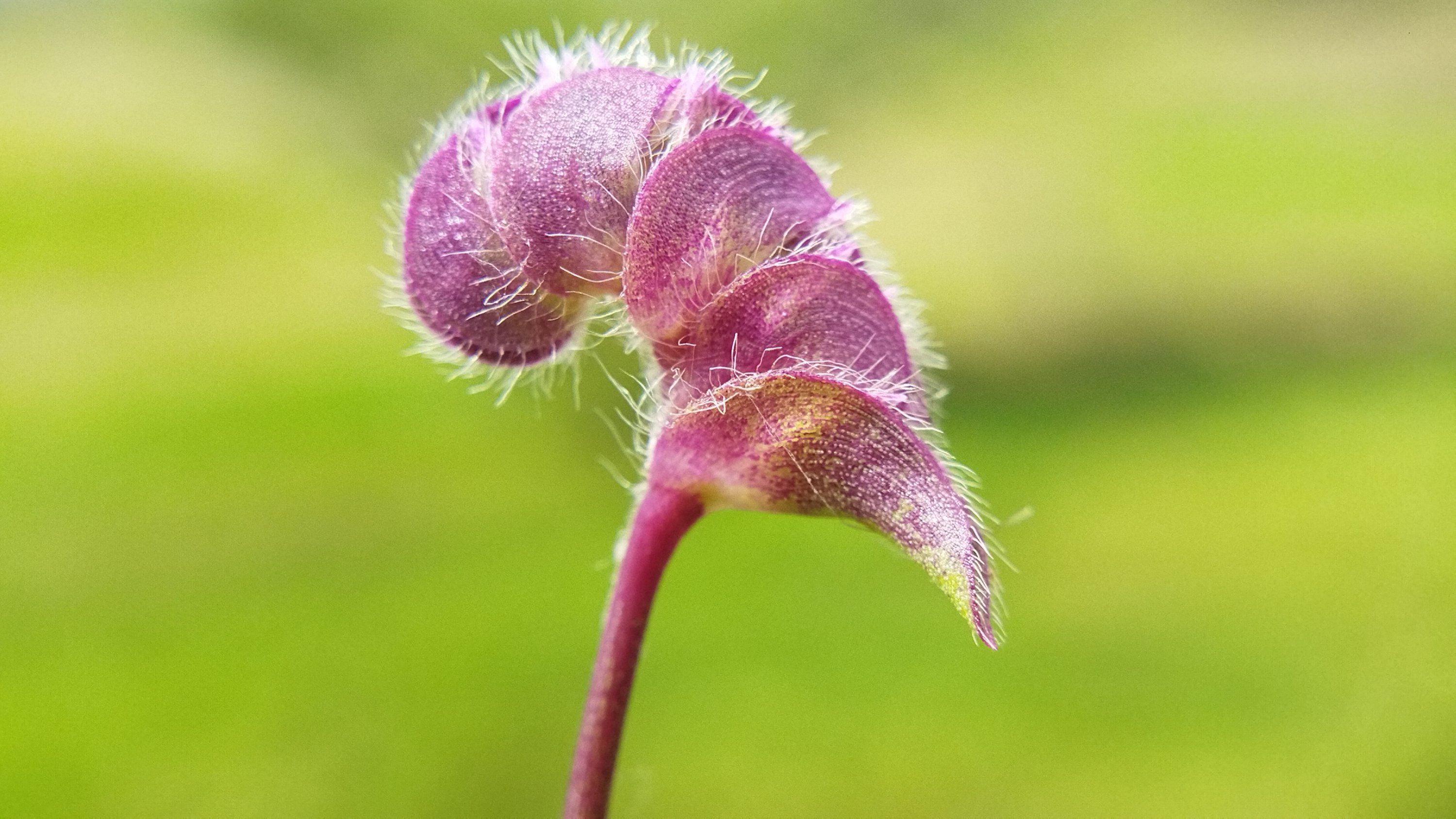
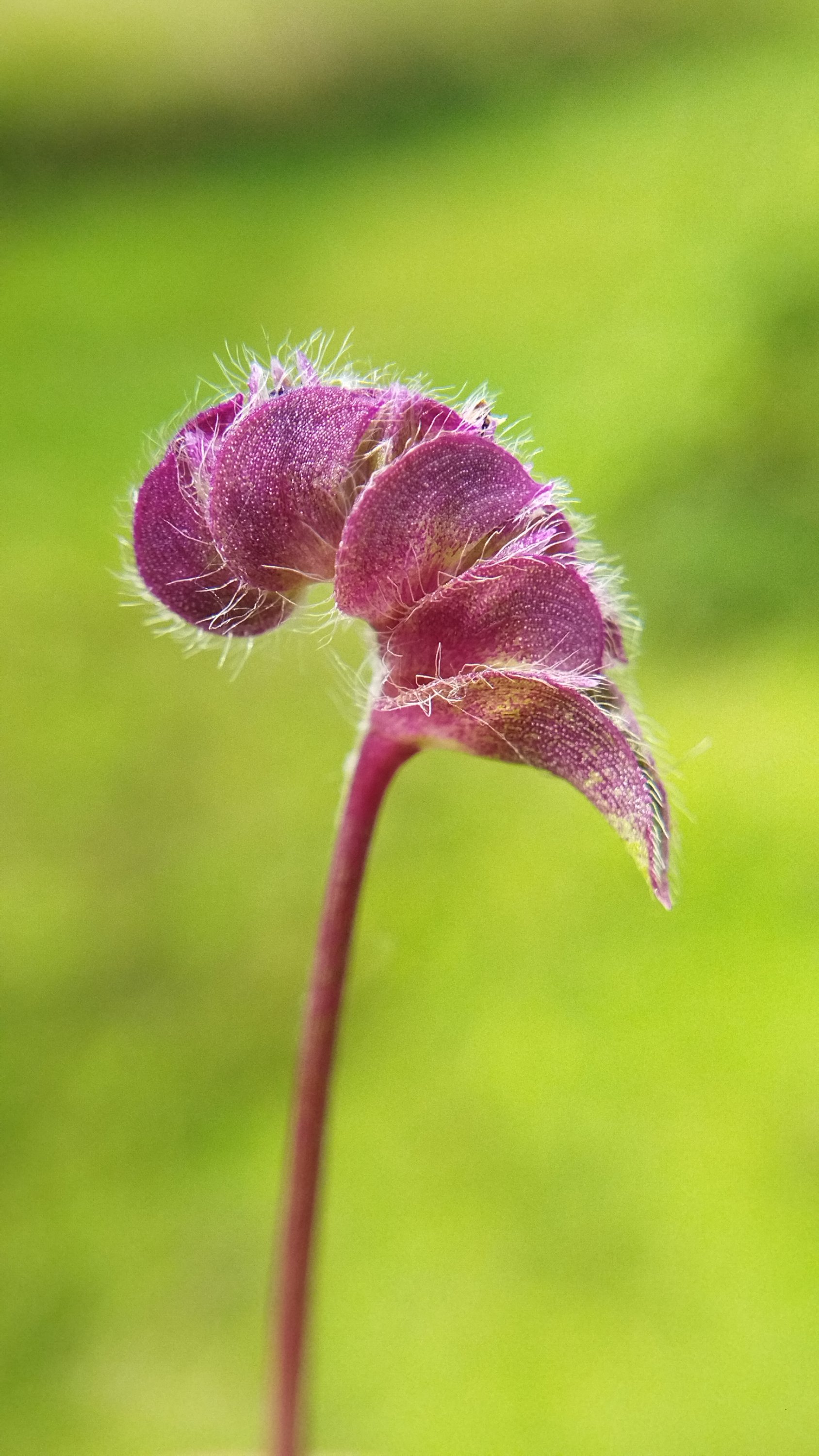
നനവാർന്ന പാറപ്രദേശങ്ങൾ, പുൽമേടുകൾ, തുറസ്സാർന്ന ഇടങ്ങൾ എന്നിവിടങ്ങളിലെല്ലാം ധാരാളം കാണപ്പെടുന്ന ഏകവർഷിയായ ഒരു കുറ്റിച്ചെടിയാണ് കുടുമനീലി.ഇവ പച്ച, മെറൂൺ നിറങ്ങളിൽ കാണപ്പെടുന്നു.ഇലകൾ ഏകാന്തരം. തണ്ടും ഇലയും ഫ്ലഷിയാണ്. പൂവ് ഒറ്റയായിട്ട് ഉണ്ടാവുന്നു. ബ്രാക്റ്റുകളുടെ വലിയൊരു അടുക്കിനുള്ളിൽ നിന്നാണ് പൂവ് വരുന്നത്. നീലനിറം, മൂന്ന് ദളങ്ങൾ, 6 കേസരങ്ങൾ, അനേകം രോമങ്ങൾ, മൂന്ന് വിദളങ്ങൾ, ഒരു സ്റ്റൈൽ എന്നിങ്ങനെയാണ് പൂവിന്റെ ഘടന.



 Native Plants